Introduction
If your organization provides employee health benefits — group health insurance, HRAs, HSAs, supplemental coverage — health insurance administration is one of the most consequential HR functions in the business. Group health policies renew annually with broker negotiations and carrier reviews; ACA marketplace coverage runs on calendar-year cycles with open enrollment windows; and missed renewal windows can leave employees and employers without coverage at the worst possible moments.
This article explains what health insurance is, the employer group coverage framework, ACA marketplace plans, open enrollment cycles, COBRA continuation, and the most practical way to track health insurance dates across an employer benefits program.
For most HR and benefits teams, annual renewal cycles are well understood. The hard part is the calendar across multiple plan years, multiple carriers, COBRA elections, and individual employee qualifying events.
What Is Health Insurance?
Health insurance is coverage that pays for medical, surgical, and prescription drug services for the insured individual. In the U.S. employment context, health insurance is most commonly provided through:
- Employer group health plans — coverage purchased by employers and offered to employees and dependents. Subject to ERISA (private employers), state insurance law, and federal mandates (ACA, HIPAA, COBRA, others).
- Individual marketplace coverage — coverage purchased through the ACA Health Insurance Marketplace or state-based exchanges by individuals not eligible for employer coverage.
- Government programs — Medicare (age 65+ or disability), Medicaid (income-based), CHIP (children), TRICARE (military), VA (veterans).
- COBRA continuation coverage — extension of employer coverage after qualifying events (typically up to 18 months at 102% of full premium).
Employer group health insurance:
- Plan year — typically calendar year (January-December) or fiscal-year alignment.
- Open enrollment — annual window during which employees can elect, change, or cancel coverage. Outside open enrollment, changes require qualifying life events (marriage, birth, loss of other coverage).
- Carrier renewal — annual broker-and-carrier negotiation typically begins 90-180 days before plan year end.
- Funding models — fully insured (carrier bears risk) or self-funded (employer bears risk with stop-loss insurance).
ACA-specific:
- Open enrollment for individual coverage — typically November 1 through January 15 for plan years beginning January 1.
- Special Enrollment Periods (SEPs) — outside open enrollment for qualifying life events.
- Subsidies — premium tax credits and cost-sharing reductions available to qualifying individuals.
COBRA:
- Election window — 60 days after qualifying event.
- Coverage duration — 18 months typical; 29 months for disability; 36 months for certain dependent events.
- Premium — 102% of total premium cost (covering 100% of premium plus 2% administrative fee).
Why Health Insurance Tracking Matters for Your Organization
Health insurance currency protects against three concrete risks: employee coverage gaps, ACA compliance penalties, and renewal-negotiation timing pressure.
From an employee-coverage standpoint, lapsed enrollment, missed open enrollment windows, and COBRA election failures can leave employees without coverage during medical events.
From an ACA compliance standpoint, applicable large employers (50+ FTEs) face employer-mandate penalties for failure to offer affordable, minimum-value coverage to full-time employees. Reporting (Forms 1095-C and 1094-C) follows specific calendar deadlines.
From a renewal-negotiation standpoint, plan year renewal involves broker quotes, carrier negotiations, plan design changes, and employee communications. Starting late means accepting unfavorable terms.
For HR, benefits, and finance teams, the health insurance calendar is one of the most consequential annual operational cycles in the business.
Common Scenarios for Tracking Health Insurance Dates
Mid-Market and Enterprise HR Teams
Mid-market and enterprise employers manage annual plan renewals, open enrollment, ACA reporting, and COBRA administration across hundreds or thousands of employees.
Small Business Owners
Small businesses balance offering health coverage with affordability, often using broker support to navigate annual renewals.
Multi-State Employers
Multi-state operations face varying state insurance rules and (in some states) state-specific coverage mandates.
Self-Funded Employer Plans
Self-funded employers manage stop-loss insurance renewals alongside the underlying plan administration.
Benefits Brokers and Consultants
Brokers and consultants manage renewal timelines for many client employers.
How Health Insurance Tracking Benefits Your Organization
A reliable program produces measurable benefits.
For the company, current tracking supports timely renewal negotiations, clean ACA compliance, accurate COBRA administration, and clear employee communication.
For HR, benefits, and finance teams, the calendar becomes predictable. Renewals start with adequate lead time. Open enrollment is planned and executed with intentional employee engagement.
For employees, predictable open enrollment and timely COBRA elections support continued coverage during life transitions.
How to Track Health Insurance Expiration Dates
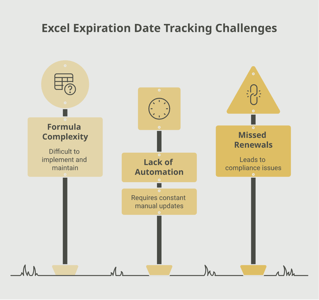
Benefits administration platforms (Workday Benefits, ADP, Paylocity, Gusto, Zenefits, Justworks, others) typically manage plan year cycles, open enrollment, and ACA reporting.
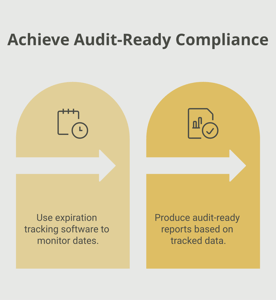
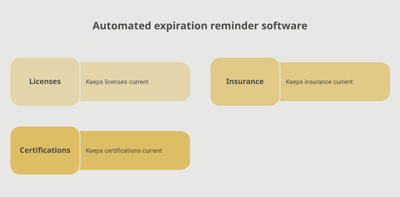
For organizations using a separate compliance tracker alongside benefits administration software, a platform like Expiration Reminder stores each plan with carrier, broker, plan year, renewal date, open enrollment window, ACA reporting deadlines, COBRA election windows, and supporting documents. Reminders fire automatically before each milestone.
Key features include automated reminders at multiple intervals (180, 120, 90, 60, 30 days), document storage for plan documents, carrier contracts, and ACA reporting, dashboard views by plan, vendor, or expiry window, audit-ready reports for ACA compliance and finance, and the ability to log renewals in one step.
Key Takeaways
- Health insurance is coverage paying for medical, surgical, and prescription drug services.
- Common sources: employer group plans, ACA marketplace, Medicare, Medicaid, CHIP, TRICARE, VA, COBRA.
- Employer group plans typically renew annually on calendar or fiscal year cycle.
- Open enrollment is the annual window for plan elections; qualifying life events trigger Special Enrollment outside open enrollment.
- COBRA continuation provides up to 18 months of coverage (longer for disability or certain dependent events) at 102% of full premium.
- ACA reporting (Forms 1095-C, 1094-C) follows specific calendar deadlines for applicable large employers.
- Lapses cause employee coverage gaps, compliance penalties, and rushed renewal negotiations.
Frequently Asked Questions
When is health insurance open enrollment?
For ACA marketplace coverage, typically November 1 through January 15 for plan years starting January 1. Employer plan open enrollment varies — many align with the calendar year; others use fiscal-year alignment.
What is a Special Enrollment Period (SEP)?
A window outside open enrollment during which an individual can enroll in or change coverage due to a qualifying life event — marriage, divorce, birth/adoption, loss of other coverage, moving, others.
What is COBRA?
Federal continuation coverage requiring most employer group health plans to offer departing employees continued coverage for up to 18 months (longer in some circumstances) at 102% of full premium.
What is the difference between fully insured and self-funded?
Fully insured: the carrier bears the financial risk. Self-funded: the employer bears the risk (typically with stop-loss insurance protecting against catastrophic claims).
What are ACA Forms 1094-C and 1095-C?
IRS forms used by applicable large employers (50+ FTEs) to report health coverage offered to full-time employees. Annual filing required.
How long does COBRA coverage last?
18 months typical; 29 months for total disability during the first 60 days of COBRA; 36 months for certain dependent events (divorce, death, dependent aging out, others).
What is an HSA?
A Health Savings Account — a tax-advantaged savings account paired with a High Deductible Health Plan (HDHP), allowing tax-free contributions, growth, and withdrawals for qualified medical expenses.
How do organizations track health insurance dates across many plans?
Combinations of benefits administration platforms, brokers, and dedicated tracking platforms. The system that actively reminds before each milestone is the one that prevents most lapses.
Conclusion
Health insurance administration is one of the most consequential HR cycles in any employer's year — affecting employee well-being, compliance, and significant financial outlay. The substantive work — designing plans, negotiating renewals, communicating with employees, administering elections — sits with HR, benefits, brokers, and finance. The administrative work — knowing every plan year deadline, every renewal date, every open enrollment window, every ACA filing deadline — is where most benefits programs need help.
If your team tracks health insurance through benefits administration software, you may already have integrated calendars. For organizations seeking complementary tracking, a purpose-built platform like Expiration Reminder centralizes every plan and milestone, sends reminders before each deadline, stores the supporting documents, and produces audit-ready reports the moment anyone asks.
Cover the workforce, manage the cycles, and let the system handle the calendar.