Introduction
If your workforce operates at uncontrolled hazardous waste sites, treatment/storage/disposal facilities, or responds to hazardous substance releases, HAZWOPER training is the credential that makes the work legal under U.S. federal law. The training rules are specific, the annual refresher is mandatory, and a lapse of more than 12 months can force a worker back to the full initial course rather than a single 8-hour refresher.
This article explains what HAZWOPER certification is, the OSHA standard behind it, the 40-hour initial and 8-hour annual refresher requirements, the consequences of a lapse, and the most practical way to track HAZWOPER training across a workforce.
For most environmental, EHS, and operations teams, sending workers to the initial 40-hour course is well understood. The hard part is the calendar — knowing whose 8-hour refresher is due, who has slipped past 12 months, and who needs to start from the initial course again.
What Is HAZWOPER Certification?
HAZWOPER — Hazardous Waste Operations and Emergency Response — is OSHA-regulated training under 29 CFR 1910.120 (general industry) and 29 CFR 1926.65 (construction). HAZWOPER applies to workers in three categories of operations:
1. Cleanup operations at uncontrolled hazardous waste sites (Superfund/CERCLA, RCRA corrective action, voluntary cleanups). 2. Routine operations at treatment, storage, and disposal facilities (TSDFs). 3. Emergency response operations to releases of hazardous substances.
Training requirements vary by role and exposure level:
- 40-Hour HAZWOPER — workers at uncontrolled hazardous waste sites or those who may be exposed to hazardous substances at or above PEL. Required before commencing site work, plus 3 days of supervised field experience.
- 24-Hour HAZWOPER — workers at uncontrolled sites who are unlikely to be exposed at or above PEL and who are not required to wear respirators. Plus 1 day of supervised field experience.
- 8-Hour HAZWOPER for Supervisors — managers and supervisors directly responsible for HAZWOPER workers. Builds on the 40-hour or 24-hour training.
- First Responder Awareness, Operations, HazMat Technician, and HazMat Specialist — emergency response training levels under 1910.120(q).
- TSDF Worker Training (24-Hour) — for workers at treatment/storage/disposal facilities.
The 8-Hour HAZWOPER Refresher is required annually for all HAZWOPER-trained workers. The refresher must be completed within 12 months of the last training (initial or previous refresher).
If more than 12 months pass since the last HAZWOPER training, the worker must take the next available course — and if a substantial amount of time has passed, OSHA may require the worker to repeat the initial 40-hour or 24-hour training.
HAZWOPER training records must be maintained by the employer and made available to OSHA on request.
Why HAZWOPER Certification Matters for Your Organization
HAZWOPER currency protects against three concrete risks: hazardous substance exposure, OSHA citations, and project disqualification.
From a safety standpoint, hazardous waste sites and emergency response operations involve serious chemical, physical, and biological hazards. Training is the primary control between workers and those hazards.
From a regulatory standpoint, HAZWOPER violations include both direct training-related citations and indirect consequences when workers are found at hazardous waste sites without current credentials.
From a project standpoint, federal Superfund and large state-led cleanups, refinery turnarounds, demolition projects involving hazardous materials, and similar work require contractors to demonstrate that all on-site workers have current HAZWOPER. Lapsed credentials disqualify workers and can affect project staffing.
For environmental services contractors, industrial maintenance companies, and emergency response teams, HAZWOPER currency across the workforce is a core operational control.
Common Scenarios for Tracking HAZWOPER Certification Dates
Environmental Services and Remediation Contractors
Environmental contractors performing Superfund, RCRA, brownfield, and voluntary cleanup work need every site worker HAZWOPER-current.
Industrial Maintenance and Turnarounds
Refinery turnarounds, chemical plant maintenance, and similar work involve hazardous substance exposure. HAZWOPER training is typically required for contracted workforces.
Emergency Response and HazMat Teams
Industrial HazMat teams, public-sector emergency response, and contractor response teams operate under HAZWOPER 1910.120(q) emergency response training tiers.
Demolition and Asbestos Abatement
Demolition projects involving hazardous materials often require HAZWOPER training in addition to topic-specific credentials (asbestos, lead, others).
TSDF Operators
Workers at treatment, storage, and disposal facilities operate under HAZWOPER training requirements specific to TSDF operations.
How HAZWOPER Tracking Benefits Your Organization
A reliable tracking program produces measurable benefits.
For the company, current HAZWOPER credentials support project staffing, satisfy client and prime contractor audits, and reduce the risk of OSHA citations for untrained workers at hazardous sites.
For safety, EHS, training, and operations teams, the certification calendar becomes a predictable activity. Annual refreshers are scheduled before the 12-month deadline. Workers approaching the cliff-edge are identified early.
For workers, predictable training reduces administrative friction and ensures they remain qualified for the work they were hired to perform.
How to Track HAZWOPER Certification Expiration Dates
Learning management systems and many environmental services platforms include HAZWOPER tracking. Training providers (OSHA Education Center, OSHA.com, e-Training Inc., others) maintain records for courses purchased through them.
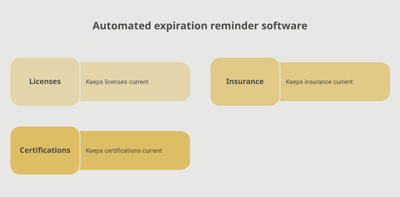
For organizations using a separate compliance tracker, a platform like Expiration Reminder stores each worker with their HAZWOPER training history (initial date, refresher dates), next-due date, training provider, and supporting documents. Reminders fire automatically before each annual refresher.
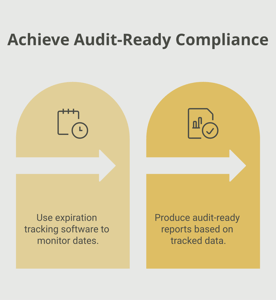
Key features include automated reminders at multiple intervals (120, 90, 60, 30 days — HAZWOPER refresher scheduling sometimes needs lead time), document storage for training certificates, dashboard views by project, site, or expiry window, audit-ready reports for OSHA and project clients, and the ability to log new training events in one step.
Key Takeaways
- HAZWOPER is OSHA-regulated training under 29 CFR 1910.120 (general industry) and 1926.65 (construction).
- Applies to workers at uncontrolled hazardous waste sites, TSDFs, and emergency response operations.
- Initial training is 40 hours (full site work) or 24 hours (limited exposure), plus supervised field experience.
- 8-Hour Refresher is required within 12 months of the last HAZWOPER training.
- Lapses beyond 12 months may require the next available course; substantial lapses may require repeating the initial training.
- Training records must be maintained by the employer and made available to OSHA.
- Automated tracking with reminders is the reliable approach for any workforce subject to HAZWOPER.
Frequently Asked Questions
Who needs HAZWOPER training?
Workers at uncontrolled hazardous waste sites, employees at TSDFs, and emergency response personnel handling hazardous substance releases. Different roles require different training levels.
What is the difference between 40-hour and 24-hour HAZWOPER?
The 40-hour course is required for workers at uncontrolled sites who may be exposed at or above PEL or who must wear respirators. The 24-hour course covers workers at uncontrolled sites unlikely to be exposed at PEL and not required to wear respirators.
How often is the HAZWOPER refresher required?
Every 12 months. The 8-Hour HAZWOPER Refresher must be completed within 12 months of the last training (initial or previous refresher).
What happens if I miss the 12-month refresher deadline?
You must take the next available course. If a substantial amount of time has passed, OSHA may require repeating the initial 40-hour or 24-hour training rather than just the 8-hour refresher.
What is supervised field experience?
After completing 40-hour HAZWOPER, workers need 3 days of actual field experience under the direct supervision of a trained, experienced supervisor before working independently. 24-hour HAZWOPER requires 1 day of supervised field experience.
Can HAZWOPER training be delivered online?
OSHA has accepted online or computer-based HAZWOPER training, but training providers must meet OSHA's requirements for course content and assessment. Hands-on training elements may still be required for certain topics.
What is HAZWOPER 1910.120(q)?
The emergency response portion of the HAZWOPER standard — covering responders at five training tiers (First Responder Awareness, First Responder Operations, HazMat Technician, HazMat Specialist, Incident Commander).
How long should HAZWOPER records be kept?
OSHA requires HAZWOPER training records to be maintained by the employer for the duration of employment and made available to OSHA on request. Most employers retain records several years beyond employment to support legal defenses.
Conclusion
HAZWOPER certification is one of the highest-stakes credentials in environmental services, industrial maintenance, and emergency response. The substantive work — delivering training, providing supervised field experience, applying procedures on site — sits with EHS, safety, and operations. The administrative work — knowing every worker's training history and ensuring 8-hour refreshers happen within the 12-month window — is where most programs need help.
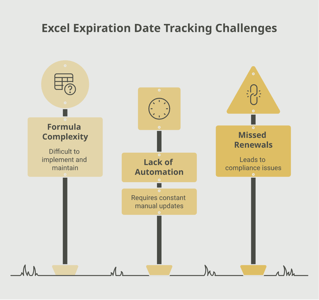
If your team tracks HAZWOPER through LMS or spreadsheets, you already know how easy it is for one worker's 12-month deadline to slip past. A purpose-built tracking platform like Expiration Reminder centralizes every training record, sends reminders before each refresher date, stores the supporting documents, and produces audit-ready reports the moment anyone asks.
Train the workforce, beat the 12-month clock, and let the system handle the calendar.