Introduction
If your workforce includes lawful permanent residents (green card holders), the card itself must be renewed every 10 years even though the underlying immigration status does not expire. The renewal can take 6–24 months, and an expired card creates immediate Form I-9 employment verification issues even though the worker remains lawfully employable. The calendar matters as much as the underlying status.
This article explains what a US green card is, the 10-year renewal cycle, Form I-90 mechanics, the I-9 employment-verification implications, and the most practical way to track green card status across a workforce.
For most HR and immigration-compliance teams, capturing green card data at I-9 verification is well understood. The hard part is the calendar — knowing whose card is approaching expiry, ensuring renewal starts in time, and managing I-9 reverification when expirations approach.
What Is a Green Card?
A US green card (formally a Permanent Resident Card, Form I-551) is the documentation issued by US Citizenship and Immigration Services (USCIS) to lawful permanent residents (LPRs). It evidences the holder's lawful permanent resident status.
Key distinctions:
- Status vs. document — Lawful permanent resident status does not expire (unless abandoned or revoked through criminal conviction or extended absence). The green card (the physical document) expires and must be renewed.
- 10-year renewal — Most green cards are valid for 10 years and must be renewed using Form I-90.
- 2-year conditional permanent residence — Some categories (marriage-based green cards within first 2 years of marriage, EB-5 investor green cards) receive 2-year conditional cards that must be converted to permanent status via Form I-751 or I-829.
The Form I-90 renewal process:
- File 6 months before expiry — USCIS recommends; up to 1 year before is permitted.
- Receipt notice — Form I-797 receipt notice extends the validity of the expired card by 36 months (extended from 24 months effective September 10, 2024) for I-9 employment verification, travel, and most other purposes.
- Processing time — 6–24 months typical as of recent reporting; varies by USCIS service center workload.
For employment verification (Form I-9), an unexpired green card is a List A document satisfying both identity and work authorization. When a green card expires, the employer must reverify employment authorization unless the worker presents the I-90 receipt notice with the expired card (allowed under USCIS guidance during the 36-month extension period).
For international travel, a green card holder must present an unexpired green card upon return to the US. The I-90 receipt notice may not be accepted at all ports of entry; the worker may need to obtain an ADIT (boarding) stamp at a USCIS field office.
Why Green Card Tracking Matters for Your Organization
Green card tracking protects against three concrete risks: I-9 verification gaps, worker disruption, and employer-immigration-compliance findings.
From an I-9 standpoint, an expired green card without the I-90 receipt notice creates an immediate reverification obligation. Continuing to employ a worker without completing reverification is a paperwork violation.
From a worker-experience standpoint, expired green cards cause significant personal disruption — travel difficulties, banking issues, state ID renewal complications, and routine document presentation friction.
From an immigration-compliance standpoint, ICE audits and DOJ I-9 inspections review employer paperwork. Documented expiration tracking and timely reverification are key elements of a defensible I-9 program.
For HR, payroll, and immigration-compliance teams, the green card calendar across the workforce is a meaningful compliance control even though the underlying LPR status does not expire.
Common Scenarios for Tracking Green Card Expiration Dates
General Employer Workforces
Any US employer with green card-holder employees should track card expiration as part of broader I-9 management.
Large HR and Immigration-Compliance Teams
Large employers with hundreds or thousands of LPR employees track expiration as part of structured I-9 audits and reverification programs.
Industries with High LPR Workforces
Healthcare, hospitality, agriculture, manufacturing, and tech industries often have substantial LPR workforces with structured immigration-compliance programs.
Frequent-Traveler Workforces
Workers who travel internationally for business need unexpired green cards for return entry; tracking is operationally important.
Conditional Permanent Residents
Workers on 2-year conditional cards need particularly close tracking — the I-751 (marriage-based) or I-829 (investor-based) petition must be filed in the 90 days before the conditional card expires.
How Green Card Tracking Benefits Your Organization
A reliable program produces measurable benefits.
For the company, current tracking supports I-9 compliance, ICE audit defense, and clean immigration-program documentation.
For HR and immigration-compliance teams, the green card calendar becomes a predictable activity. Reverification is scheduled proactively. Conditional residents are flagged for the 90-day filing window.
For workers, predictable tracking helps them manage personal renewal alongside other documents and travel plans.
How to Track Green Card Expiration Dates
I-9 management systems (Tracker I-9, Form I-9 Compliance, HireRight I-9, others) track document expiration as part of structured reverification workflows.
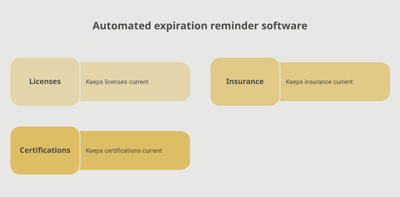
For organizations using a separate compliance tracker, a platform like Expiration Reminder stores each worker with their green card category, expiration date, conditional status indicator (if applicable), and supporting documents. Reminders fire automatically before each renewal milestone — and specifically before the 90-day conditional-petition window.
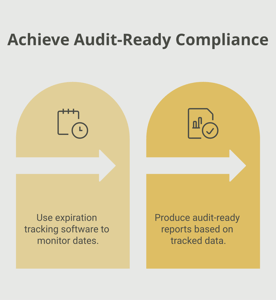
Key features include automated reminders at multiple intervals (12, 6, 3 months — green card renewal needs long lead times), document storage for I-9 supporting documents with confidentiality controls, dashboard views by worker, expiry window, or conditional status, audit-ready reports for ICE audits and internal I-9 reviews, and the ability to log renewals in one step.
Key Takeaways
- A US green card (Form I-551) documents lawful permanent resident status; the status does not expire but the card does.
- Most green cards are valid for 10 years and renewed via Form I-90.
- Conditional permanent residents (2-year cards) must file Form I-751 or I-829 in the 90 days before the conditional card expires.
- Form I-90 receipt notice extends card validity by 36 months for I-9 and most other purposes (effective September 10, 2024).
- I-90 processing times range from 6 to 24 months.
- Lapsed cards create immediate I-9 reverification obligations for the employer.
- International travel may require an ADIT (boarding) stamp from USCIS when the card has expired.
- Automated tracking with reminders supports both I-9 compliance and worker experience.
Frequently Asked Questions
How long is a green card valid?
Most green cards are valid for 10 years. Conditional permanent residence cards (marriage-based first-2-years and EB-5 investor) are valid for 2 years.
What happens when a green card expires?
The underlying lawful permanent resident status does not expire (unless abandoned or revoked). The physical card must be renewed using Form I-90. Continuing to live and work in the US is permitted; the card simply needs to be renewed to maintain valid documentation.
What is Form I-90?
The USCIS form to renew or replace a green card. It is used for routine 10-year renewals as well as lost, stolen, damaged, or name-change replacements.
When should I file Form I-90?
USCIS recommends filing approximately 6 months before expiration; up to 1 year before is permitted.
Does an expired green card create employment problems?
Yes, for I-9 employment verification purposes. The employer must reverify employment authorization. The I-90 receipt notice extends card validity by 36 months for I-9 purposes (since September 10, 2024).
What is conditional permanent residence?
A 2-year permanent residence status granted to some marriage-based and investor-based applicants. The condition must be removed by filing Form I-751 (marriage-based) or I-829 (investor-based) in the 90 days before the conditional card expires.
Can I travel internationally with an expired green card?
Travel can be complicated. Some ports of entry accept the I-90 receipt notice with the expired card; others require an ADIT (boarding) stamp from a USCIS field office. Long international trips on an expired card are not recommended.
How long does I-90 take to process?
6–24 months typical as of recent reporting. Processing time varies by USCIS service center workload.
Conclusion
Green card tracking sits at the intersection of immigration compliance and routine HR document management. The substantive work — filing Form I-90, attending USCIS appointments, managing the journey — sits with the lawful permanent resident worker. The administrative work for the employer — knowing every LPR worker's card expiration, supporting I-9 reverification, and flagging conditional residents for the 90-day petition window — is where most HR programs need help.
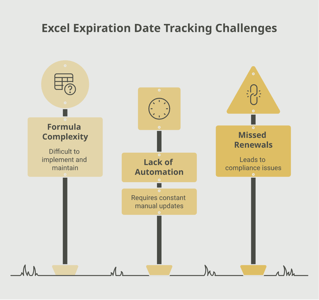
If your team tracks green card status through I-9 management software or spreadsheets, you already know how easy it is for one worker's card expiration to slip past or for a conditional petition to miss the 90-day window. A purpose-built tracking platform like Expiration Reminder centralizes every worker's green card status, sends reminders before each renewal milestone, stores the supporting documents with appropriate confidentiality controls, and produces audit-ready reports the moment anyone asks.
Verify the workforce, support the renewals, and let the system handle the calendar.