Introduction
If your business handles, prepares, or serves food — restaurants, hotels, schools, healthcare facilities, food trucks, catering, grocery, food manufacturing — food safety certification is the credential that proves frontline staff know how to keep food safe. State and local jurisdictions require specific certifications at various levels, and missing them can mean health-code citations, business-license issues, and reputational damage.
This article explains what food safety certification is, the major certification programs, the typical validity periods (3 or 5 years depending on level and jurisdiction), and the most practical way to track certification renewals across a food-service workforce.
For most operations and HR teams, getting the initial certification at hire is well understood. The hard part is the calendar — knowing who is certified, at what level, when each certification expires, and what each jurisdiction accepts.
What Is Food Safety Certification?
A food safety certification is a credential demonstrating that an individual has completed approved training and passed an examination on food safety principles. The most widely accepted programs in the United States are:
- ServSafe — run by the National Restaurant Association. ServSafe Manager, ServSafe Food Handler, ServSafe Alcohol, and ServSafe Allergens are the most common offerings.
- National Registry of Food Safety Professionals — administers Food Protection Manager and Food Handler certifications accepted in many jurisdictions.
- 360training Learn2Serve — offers food handler and food manager certifications.
- Prometric / StateFoodSafety / SafeStaff — additional ANSI-accredited program providers.
Food safety certifications fall into two main tiers:
- Food Handler — entry-level training for staff who handle food. Covers basic personal hygiene, cross-contamination, temperature control, allergens, and sanitation. Typically valid 3 years.
- Food Protection Manager (CFPM) — advanced certification for managers and supervisors. Covers comprehensive food safety management, HACCP basics, regulatory requirements, and staff training. Typically valid 5 years.
State and local requirements vary significantly:
- The FDA Food Code (adopted in some form by most U.S. jurisdictions) requires at least one Certified Food Protection Manager (CFPM) on staff at most foodservice operations.
- Some states require all food handlers to be certified (California, Texas, Arizona, Washington, Oregon, Illinois, others have varying rules).
- Some jurisdictions (DC, Maryland, parts of Virginia, others) accept ServSafe Manager certifications for only 3 years instead of the national 5-year standard.
Renewal involves completing a refresher course (some certifications) or retaking the exam (others). ServSafe Manager typically requires retaking the exam every 5 years; ServSafe Food Handler requires retaking the exam (no retraining) after 3 years.
Why Food Safety Certification Matters for Your Organization
Food safety certification protects against three concrete risks: foodborne illness outbreaks, regulatory citations, and business-operating consequences.
From a public-health standpoint, foodborne illness outbreaks are devastating for the operation involved and for the broader brand. Documented certified staff is one of the most consistent controls between safe food and a sick customer.
From a regulatory standpoint, health-department inspections routinely verify certification status. Missing or expired certifications can result in inspection failures, citations, fines, and forced closures.
From a business standpoint, business licenses, franchise agreements, insurance, and corporate-policy requirements often require active food safety certifications. Lapsed certifications can affect operating authority.
For multi-location operators — restaurant chains, hotel groups, food-service contractors — the certification calendar across the workforce is a core operational control.
Common Scenarios for Tracking Food Safety Certification Dates
Restaurant Chains and Multi-Unit Operators
Multi-unit restaurants typically require at least one CFPM on duty during all operating hours plus food handler certifications for line staff. Tracking across dozens or hundreds of locations is a real workload.
Hotels, Resorts, and Hospitality
Hotels with multiple food and beverage outlets manage certifications across restaurants, banquet operations, room service, bars, and catering teams.
Healthcare and Senior Living
Hospitals, long-term care facilities, and senior living operations have food-service teams subject to the same Food Code requirements as commercial restaurants.
Schools and Universities
K-12 food service, university dining, and contract food service operations require certified managers and trained food handlers, often with additional state-specific school food safety requirements.
Catering and Mobile Food
Caterers, food trucks, and mobile food vendors face certification requirements that vary widely by event jurisdiction. Operators working across multiple jurisdictions need broad coverage.
How Food Safety Certification Tracking Benefits Your Organization
A reliable tracking program produces measurable benefits.
For the company, current certifications maintain regulatory compliance, support clean health-department inspections, and protect the brand against foodborne illness incidents.
For HR and operations teams, the certification calendar becomes a predictable activity. Renewals are scheduled with adequate lead time. New hires can be onboarded with certification timelines built into the process.
For staff, predictable renewals reduce the administrative friction of last-minute exam scheduling.
How to Track Food Safety Certification Expiration Dates
Learning management systems and operational systems (Toast, Olo, Restaurant365, others) sometimes integrate certification tracking. ServSafe and other providers offer their own portals showing certification status for accounts purchased through them.
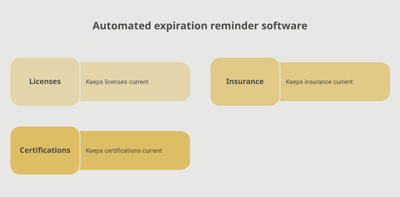
For organizations using a separate compliance tracker, a platform like Expiration Reminder stores each staff member with their certification program, level, issue date, expiration date, jurisdiction-specific validity, and supporting documents. Reminders fire automatically before each renewal.
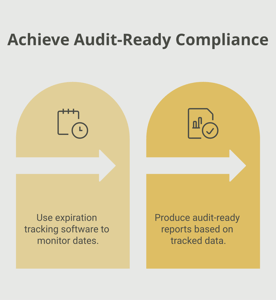
Key features include automated reminders at multiple intervals (90, 60, 30 days), document storage for certification certificates, dashboard views by location, role, or jurisdiction, audit-ready reports for health-department inspections, and the ability to log new certifications in one step.
Key Takeaways
- Food safety certifications demonstrate completion of approved food-safety training and exam passage.
- Major U.S. programs include ServSafe, National Registry, Learn2Serve, Prometric, StateFoodSafety, and SafeStaff.
- Food Handler certifications are typically valid 3 years; Food Protection Manager certifications typically valid 5 years.
- State and local rules vary — some jurisdictions accept Manager certifications for only 3 years.
- The FDA Food Code requires at least one Certified Food Protection Manager on staff at most foodservice operations.
- Lapsed certifications create health-department citation risk and may affect business-license status.
Frequently Asked Questions
How long is a ServSafe Food Handler certification valid?
3 years. After expiration, you must retake the exam (training is not required).
How long is a ServSafe Manager certification valid?
5 years in most jurisdictions. Some jurisdictions (DC, MD, parts of VA) accept the certification for only 3 years. Renewal typically requires retaking the exam.
What is a Certified Food Protection Manager (CFPM)?
A person who has completed an ANSI-accredited Food Protection Manager certification program and passed the exam. The FDA Food Code requires at least one CFPM on staff at most foodservice operations.
Do all food workers need certification?
Requirements vary by state and local jurisdiction. The Food Code requires at least one CFPM on staff. Many states (California, Texas, Arizona, Washington, Oregon, Illinois, others) also require food handler certifications for line staff.
What programs are accepted?
ANSI-accredited programs are typically accepted nationwide. Specific programs include ServSafe, National Registry of Food Safety Professionals, Learn2Serve, Prometric, StateFoodSafety, and SafeStaff. Check local requirements for any state-specific approval.
Can I renew without retaking the exam?
Most programs require retaking the exam for renewal. Some allow refresher courses; few allow renewal without testing. Check the specific program's rules.
What happens if my certification expires?
You may be working without a valid credential under local requirements. Operations relying on you as the on-staff CFPM may be out of compliance. Renew before expiry to avoid these gaps.
How do multi-unit operators track many certifications?
Combinations of LMS, operational systems, and dedicated tracking platforms. The system that actively reminds before each expiry is the one that prevents most lapses.
Conclusion
Food safety certification is one of the most visible compliance credentials in foodservice — health inspectors check, customers notice, and the consequences of a lapse range from citations to outbreaks. The substantive work — training the staff, passing the exam, applying the knowledge daily — sits with the food-service team. The administrative work — knowing who is certified, when each certification expires, and what each jurisdiction accepts — is where most operations need help.
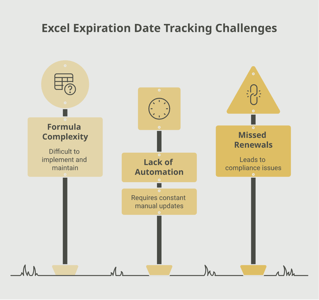
If your team tracks food safety certifications through provider portals or spreadsheets, you already know how easy it is for a staff member's certification to lapse. A purpose-built tracking platform like Expiration Reminder centralizes every certification, sends reminders before each renewal, stores the supporting documents, and produces audit-ready reports the moment anyone asks.
Keep the certifications current, keep the food safe, and let the system handle the calendar.