Introduction
If your organization is a healthcare provider, long-term care facility, or any covered entity reporting to CMS, annual flu vaccination of healthcare personnel is both a CDC recommendation and a reportable measure tied to public reporting and (in some cases) reimbursement. Beyond healthcare, many employers run annual flu vaccination programs as a baseline occupational-health offering. The calendar is straightforward — once a year — but the workforce volume and the seasonal timing make tracking essential.
This article explains what the flu vaccine is, the CDC and ACIP healthcare worker recommendations, the CMS NHSN reporting requirements, employer mandate options, and the most practical way to track flu vaccination status across a workforce.
For most occupational health and HR teams, running the annual flu campaign is well understood. The hard part is the calendar — capturing every worker's status before the season ends and meeting NHSN reporting deadlines.
What Is the Flu Vaccine?
The flu vaccine (influenza vaccine) is an annual immunization protecting against the strains of influenza expected to circulate during the upcoming respiratory virus season. Multiple formulations exist:
- Inactivated influenza vaccine (IIV) — standard injectable.
- Recombinant influenza vaccine (RIV) — egg-free injectable.
- Live attenuated influenza vaccine (LAIV) — nasal spray (eligibility-limited).
- High-dose and adjuvanted formulations — for older adults.
The vaccine is reformulated each year based on global surveillance of circulating strains. Effectiveness varies by season and population, but flu vaccination consistently reduces hospitalization and severe disease.
The Advisory Committee on Immunization Practices (ACIP) and CDC recommend annual flu vaccination for everyone 6 months of age and older with rare exceptions. For healthcare personnel specifically, ACIP and CDC recommend annual flu vaccination to protect patients and reduce transmission.
For healthcare facilities reporting to CMS, influenza vaccination among healthcare personnel must be reported through the National Healthcare Safety Network (NHSN). Reporting facilities include:
- Acute care hospitals (since 2013).
- Inpatient rehabilitation facilities (IRFs).
- Critical access hospitals.
- Long-term acute care facilities.
- PPS-exempt cancer hospitals.
- Skilled nursing facilities (since 2022–23 season).
Vaccination coverage data is publicly reported and (in some programs) tied to value-based payment.
Employer mandates vary. Some healthcare facilities require flu vaccination as a condition of employment; others use opt-out or mask-or-vaccinate policies. State laws in some jurisdictions specifically address healthcare worker flu vaccination.
Why Flu Vaccine Tracking Matters for Your Organization
Flu vaccine tracking protects against three concrete risks: occupational transmission to vulnerable patients, CMS reporting gaps, and operational disruption during severe seasons.
From a patient-safety standpoint, healthcare worker vaccination reduces transmission to immunocompromised patients, the elderly, and other vulnerable populations.
From a regulatory standpoint, CMS-certified facilities must report HCP vaccination summary data through NHSN, with reporting deadlines tied to the respiratory virus season.
From an operational standpoint, severe flu seasons cause significant workforce illness and absenteeism. Higher vaccination rates correlate with reduced operational disruption.
For healthcare organizations, the annual flu calendar is one of the most consequential workforce-health controls in the program.
Common Scenarios for Tracking Flu Vaccination Dates
Acute Care Hospitals
Hospitals run annual flu campaigns covering thousands of workforce members — clinical, administrative, contracted, and student populations. NHSN reporting is required.
Long-Term Care and Skilled Nursing
SNFs and LTC facilities have higher resident vulnerability and explicit CMS reporting requirements.
Ambulatory Care and Clinics
Outpatient clinics, urgent care, and physician practices typically run annual flu campaigns even where NHSN reporting is not required.
Public Sector and First Responders
Government healthcare workers, public health staff, and first responders typically receive annual flu vaccination as part of their occupational health programs.
General Employer Programs
Many non-healthcare employers offer annual flu vaccination as an employee benefit and occupational health measure.
How Flu Vaccine Tracking Benefits Your Organization
A reliable program produces measurable benefits.
For the company, current records support CMS NHSN reporting, satisfy accreditation expectations, reduce patient-transmission risk, and lower seasonal workforce disruption.
For occupational health and HR teams, the annual campaign becomes a predictable workflow. Reporting deadlines are met. Workforce participation can be tracked in real time.
For workers, predictable vaccination programs make participation easy and protect personal health.
How to Track Flu Vaccination Expiration Dates
Employee health management systems track immunization records. NHSN provides the reporting infrastructure for CMS-certified facilities.
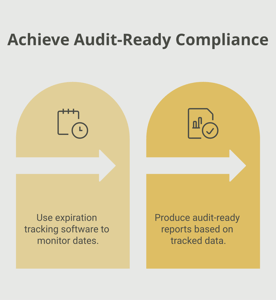
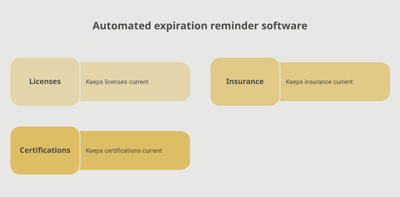
For organizations using a separate compliance tracker, a platform like Expiration Reminder stores each worker with their flu vaccination history by season, declination/exemption status, supporting documents, and reporting categories. Reminders fire automatically before each annual campaign deadline.
Key features include automated reminders before annual campaign opening and reporting deadlines, document storage for vaccination records and declinations with confidentiality controls, dashboard views by site, role, or status, audit-ready reports for NHSN and accreditation, and the ability to log new vaccinations in one step.
Key Takeaways
- The flu vaccine is an annual immunization against influenza, reformulated each season based on circulating strains.
- ACIP and CDC recommend annual flu vaccination for everyone 6 months and older, including all healthcare personnel.
- CMS-certified facilities must report HCP flu vaccination summary data through NHSN.
- Employer mandate policies vary — required, opt-out, mask-or-vaccinate, or voluntary.
- Flu vaccination coverage is highest in workplaces with formal requirements.
- The annual calendar is straightforward but workforce volume makes systematic tracking essential.
Frequently Asked Questions
How often is the flu vaccine recommended?
Annually for everyone 6 months and older. Each season's vaccine is reformulated based on global surveillance of circulating strains.
When is flu vaccination season?
The CDC recommends flu vaccination by the end of October in most years, though vaccination remains beneficial through the respiratory virus season (typically October through May).
Is flu vaccination required for healthcare workers?
CDC recommends it; CMS requires reporting of HCP vaccination summary data through NHSN for many facility types. Individual employer policies range from required to voluntary.
What is NHSN?
The National Healthcare Safety Network — a CDC-administered system that collects healthcare-associated infection and other surveillance data, including HCP influenza vaccination summary data from CMS-certified facilities.
What is a mask-or-vaccinate policy?
A policy commonly used in healthcare requiring workers who decline annual flu vaccination to wear a mask during patient care during flu season. Designed to balance employee choice with patient protection.
Are there medical exemptions?
Yes. Genuine medical contraindications (severe allergic reaction to a previous dose or vaccine component) are exemptions. Some employers also recognize religious exemptions; specifics vary by employer and jurisdiction.
What is the difference between IIV, RIV, and LAIV?
IIV is the inactivated injectable vaccine (most common). RIV is recombinant (egg-free) injectable. LAIV is the live attenuated nasal spray (eligibility-limited to healthy non-pregnant individuals aged 2-49).
How long should flu vaccination records be kept?
OSHA medical records under 1910.1020 must be kept for the duration of employment plus 30 years. NHSN reporting requirements apply during the relevant reporting season.
Conclusion
Annual flu vaccination is one of the most familiar yet operationally significant workforce-health activities — particularly in healthcare, where NHSN reporting and patient protection make the calendar consequential. The substantive work — running the annual campaign, administering vaccines, supporting workers through exemption processes — sits with occupational health, HR, and clinical leadership. The administrative work — knowing every worker's status before the reporting deadline and producing the records on demand — is where most programs need help.
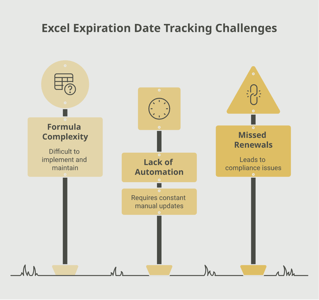
If your team tracks flu vaccination through employee health platforms or NHSN directly, you already know how easy it is for a workforce member's status to slip past the reporting deadline. A purpose-built tracking platform like Expiration Reminder centralizes every worker's annual vaccination, sends reminders before each season's campaign and reporting deadline, stores the supporting documents, and produces audit-ready reports the moment anyone asks.
Vaccinate the workforce, report the coverage, and let the system handle the calendar.