Introduction
If your operations involve any work at height — construction, roofing, facade work, tower work, industrial maintenance, warehousing, manufacturing — fall protection training is the foundational control between workers and the leading cause of construction fatalities in the United States. OSHA's standards on fall protection are among the most cited findings every year, and most of those citations trace back to training and competent-person gaps.
This article explains what fall protection certification is, the OSHA standards behind it, the competent-person training requirement, the typical retraining triggers, and the most practical way to track fall protection training across a workforce.
For most construction and safety teams, delivering initial training is well understood. The hard part is the calendar — knowing whose training is current, which sites have a designated competent person, and which workers require retraining following equipment or task changes.
What Is Fall Protection Certification?
Fall protection certification refers to the training and demonstrated competence required for workers exposed to fall hazards and for the competent persons who oversee fall protection programs. The applicable U.S. standards include:
- OSHA 29 CFR 1926 Subpart M (Fall Protection - Construction) — covers fall protection at construction sites, with the general 6-foot trigger above lower levels.
- OSHA 29 CFR 1926.503 (Training Requirements) — specifies training requirements for fall protection in construction.
- OSHA 29 CFR 1910 Subpart D (Walking-Working Surfaces) — covers general-industry fall protection, with a 4-foot trigger.
- OSHA 29 CFR 1910.140 (Personal Fall Protection Systems) — sets criteria for personal fall arrest systems, positioning systems, and travel restraint systems in general industry.
The training required under 1926.503 includes:
- Nature of fall hazards in the work area.
- Procedures for erecting, maintaining, disassembling, and inspecting fall protection systems.
- Use and operation of personal fall arrest, guardrail, safety net, warning line, controlled access zone, and other systems.
- Role of the worker in safety monitoring systems where used.
- Limitations on use of mechanical equipment near roofing.
- Correct procedures for handling and storage of equipment and materials.
- OSHA's fall protection standards.
Training must be conducted by a competent person — defined as someone capable of identifying existing and predictable fall hazards, authorized to take prompt corrective action, and trained in the proper construction, use, and inspection of fall protection systems.
OSHA does not impose a fixed annual retraining cycle, but retraining is required when:
- Changes in the workplace render previous training obsolete.
- Changes in fall protection systems or equipment render previous training obsolete.
- Inadequacies in the employee's knowledge or use of fall protection systems indicate the worker has not retained the requisite understanding or skill.
Industry best practice is a refresher cycle aligned with employer-defined renewal periods (commonly 1–3 years) plus retraining on equipment or task changes.
Why Fall Protection Certification Matters for Your Organization
Fall protection currency protects against three concrete risks: worker fatality, OSHA citations, and project shutdowns.
From a safety standpoint, falls are the leading cause of construction fatalities in the United States. Proper fall protection systems and trained users are the controls that prevent the most common construction fatality category.
From a regulatory standpoint, OSHA's fall protection standard (1926.501) is consistently the most cited construction standard year after year. Training gaps under 1926.503 are a common follow-on finding.
From an operational standpoint, project-site inspections by general contractors, owners, or OSHA can shut down work at height when training documentation is missing or stale.
For construction, roofing, telecom tower work, industrial maintenance, and warehousing operations with mezzanines or racks, the fall protection training calendar is one of the most consequential safety controls in the program.
Common Scenarios for Tracking Fall Protection Certification Dates
Construction General and Specialty Contractors
GCs and specialty subs (roofing, framing, electrical, mechanical, glazing) running work at height need every worker trained and a designated competent person on each site.
Roofing and Solar
Roofing contractors and solar installers face concentrated fall exposure. Fall protection training is often supplemented with manufacturer-specific PFAS training.
Telecom and Tower Work
Tower climbers face highly specialized fall protection requirements, with credentials from NATE (National Association of Tower Erectors) and other industry programs.
Industrial Maintenance
Industrial maintenance, refining, and chemical plant work at height requires fall protection training plus site-specific procedures.
Warehousing and Logistics
Warehouse operations with mezzanines, rack systems, and order pickers face fall protection requirements under 1910 Subpart D (4-foot general industry trigger).
How Fall Protection Tracking Benefits Your Organization
A reliable tracking program produces measurable benefits.
For the company, current training records support OSHA and client-audit compliance, reduce fall incident risk, and preserve project schedules.
For safety, training, and operations teams, the training calendar becomes predictable. Refresher training is scheduled with adequate lead time. Competent-person designations are kept current as the workforce changes.
For workers, predictable training and clear competent-person designations support a safer working environment at height.
How to Track Fall Protection Certification Expiration Dates
Learning management systems track training completions. Many construction-focused safety platforms integrate training records with site-specific compliance.
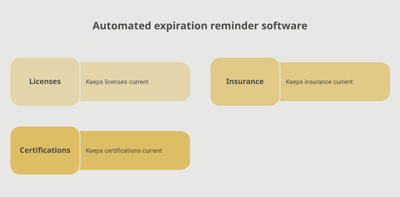
For organizations using a separate compliance tracker, a platform like Expiration Reminder stores each worker with their fall protection training, competent-person designations, last refresher date, equipment-specific qualifications, and supporting documents. Reminders fire automatically before each refresher.
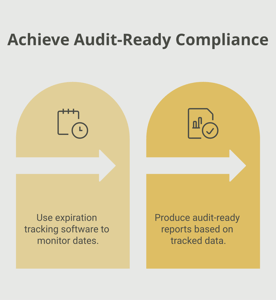
Key features include automated reminders at multiple intervals (90, 60, 30 days), document storage for training records and competent-person designations, dashboard views by site, role, or training status, audit-ready reports for OSHA and customers, and the ability to log new training events in one step.
Key Takeaways
- Fall protection certification is required training under OSHA 1926.503 (construction) and 1910 Subpart D / 140 (general industry).
- The construction trigger is 6 feet above a lower level; the general-industry trigger is 4 feet.
- Training must be conducted by a competent person capable of identifying fall hazards and authorized to take corrective action.
- Retraining is required on specific triggers (workplace changes, equipment changes, demonstrated skill deficiencies) — no fixed annual cycle.
- Falls are the leading cause of construction fatalities; 1926.501 is consistently the top-cited OSHA construction standard.
- Automated tracking with reminders is the reliable approach for multi-project workforces.
Frequently Asked Questions
At what height is fall protection required?
In construction, OSHA requires fall protection at 6 feet or more above a lower level (with some exceptions). In general industry, the threshold is 4 feet. Specific industries have other triggers (10 feet for scaffolding, 6 feet from steel erection, etc.).
Who can train workers in fall protection?
A competent person — defined by OSHA as someone capable of identifying existing and predictable fall hazards, authorized to take prompt corrective action, and trained in the proper construction, use, and inspection of fall protection systems.
Does OSHA require annual fall protection refresher training?
OSHA does not impose a fixed annual interval. Retraining is required on specific triggers (workplace changes, equipment changes, demonstrated skill deficiencies). Many employers adopt a 1–3 year refresher cycle as best practice.
What is a personal fall arrest system (PFAS)?
A system designed to stop a worker who has fallen, typically consisting of an anchorage, full-body harness, and connecting means (lanyard, self-retracting lifeline). Specific design and performance criteria are in 1926.502 and 1910.140.
What is the difference between fall arrest and fall restraint?
Fall arrest catches a worker who has begun to fall. Fall restraint prevents the worker from reaching the fall edge in the first place. Restraint is generally preferred where feasible.
What is a competent person versus a qualified person?
A competent person identifies hazards and takes corrective action. A qualified person has technical expertise (recognized degree, certificate, or extensive knowledge) to design or analyze specific systems. Both are defined by capability rather than certification.
What is rescue planning?
OSHA requires the employer to provide for prompt rescue of workers in the event of a fall, or assure that employees are able to rescue themselves. Suspension trauma is a serious post-fall hazard requiring rapid response.
How long should fall protection training records be kept?
OSHA does not specify a retention period for fall protection training records. Most employers retain them for the duration of employment plus several years to support multi-year audits and legal defenses.
Conclusion
Fall protection certification is one of the highest-stakes credentials in construction and any operation with work at height. The substantive work — training workers, designating competent persons, inspecting equipment, planning rescues — sits with safety, supervision, and field leadership. The administrative work — knowing every worker's training status and every site's competent-person designation — is where most programs need help.
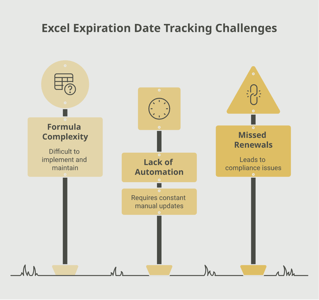
If your team tracks fall protection training through LMS or spreadsheets, you already know how easy it is for a worker's training to lapse before a critical lift or roof project. A purpose-built tracking platform like Expiration Reminder centralizes every training record, sends reminders before each refresher date, stores the supporting documents, and produces audit-ready reports the moment anyone asks.
Train the workforce, protect the height-exposed, and let the system handle the calendar.