Introduction
If your organization hires employees — whether at-will in the U.S. or under fixed-term contracts common in much of the rest of the world — the employment contract is the legal document defining the working relationship. When a fixed-term contract reaches its end date without action, the employment relationship can convert to indefinite by operation of law in many jurisdictions, with downstream consequences for both employer and employee.
This article explains what an employment contract is, the major forms it takes, how renewals work, and what happens when contracts approach their end date. You will also see the most practical way to track employment contract dates across a workforce of any size.
For most HR teams, drafting employment contracts is well understood. The hard part is the calendar — knowing every fixed-term contract's end date and acting in time to renew, convert, or end the relationship cleanly.
What Is an Employment Contract?
An employment contract is a written or implied legal agreement between an employer and an employee setting out the terms of the working relationship. The contract typically covers job title and duties, compensation, work hours, location, benefits, paid time off, intellectual property assignment, confidentiality, restrictive covenants (non-compete, non-solicit), termination rules, and dispute resolution.
The most important structural distinction is between fixed-term and indefinite (or at-will) contracts:
- At-will employment — the U.S. default in most states. Either party can end the employment at any time, for any lawful reason. There is no fixed end date; the offer letter and any associated handbook acknowledgments document the terms.
- Indefinite (permanent) contracts — common outside the U.S. The employment continues until one party terminates it, typically with required notice or cause.
- Fixed-term contracts — used for project work, seasonal employment, parental leave coverage, sabbatical replacement, or any role with a planned end date. The contract specifies a start date, an end date, and renewal/conversion rules.
Fixed-term contract management is the area where the calendar matters most. If an employee continues working past the contract's end date without a new contract in place, the employment relationship is often deemed to have converted to indefinite by operation of law — and the employer can lose flexibility, accumulate legal exposure, and find itself in a different legal regime than intended.
Many jurisdictions impose limits on consecutive fixed-term renewals — for example, several European countries cap the number of consecutive fixed-term renewals before automatic conversion to indefinite. U.S. law generally has fewer such constraints but state-specific rules apply.
Why Employment Contract Tracking Matters for Your Organization
Employment contract currency protects against three concrete risks: unintended conversion to indefinite, unpaid wage and notice exposure, and compliance findings.
From a conversion standpoint, an employee continuing to work past a fixed-term end date typically becomes an indefinite employee by default, with whatever termination rights and notice obligations the local law attaches to indefinite contracts. The employer's planned exit becomes a wrongful termination claim.
From a wage and notice standpoint, the end of a fixed-term contract triggers different obligations than the termination of an indefinite one. Severance, accrued time-off payouts, and notice obligations may apply in some jurisdictions even at clean contract expiry.
From a compliance standpoint, HR audits and labor inspections routinely review fixed-term contract files. Expired contracts kept on file without renewal or conversion are a visible finding.
For organizations operating across multiple jurisdictions — global employers, international NGOs, multinational corporations — the variation in contract types and conversion rules makes centralized tracking essential.
Common Scenarios for Tracking Employment Contract Expiration Dates
Global Employers with Fixed-Term Workforces
Multinationals operating in Europe, Latin America, Asia, and other regions where fixed-term contracts are common need to track every employee's contract end date, renewal limit, and conversion-by-default rule.
Project-Based Industries
Engineering, construction, film and television production, and other project-based industries often hire fixed-term staff for specific projects. Each contract aligns with the project; transitions need careful management.
Higher Education
Universities and colleges use fixed-term contracts for adjunct faculty, postdoctoral researchers, visiting professors, and many administrative roles. Each contract has its own end date and renewal cycle.
Healthcare and Locum Roles
Locum physicians, travel nurses, and contract clinicians work under fixed-term arrangements that overlap with credentialing, license verification, and onboarding processes.
Parental Leave and Sabbatical Coverage
HR teams hiring temporary cover for parental leave or sabbaticals manage fixed-term contracts aligned to the absent employee's return date. Returning employees sometimes delay return, creating cascading contract management work.
How Employment Contract Tracking Benefits Your Organization and Employees
A reliable contract tracking program produces measurable benefits.
For the company, current contract awareness prevents unintended indefinite conversions, supports clean wage and notice management, and produces audit-ready records.
For HR teams, the contract calendar becomes predictable. Renewal letters can be prepared 60–90 days before each end date. Conversion decisions can be made deliberately rather than by default.
For employees, clarity about contract status reduces uncertainty. Renewal conversations happen on a known cadence rather than as last-minute surprises.
How to Track Employment Contract Expiration Dates
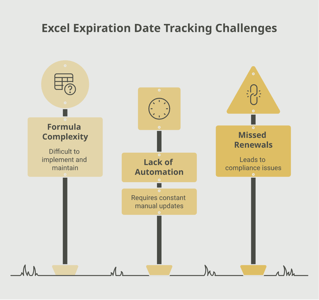
HRIS platforms (Workday, ADP, BambooHR, etc.) typically store contract end dates as employee data. Useful for inventory, less useful for active calendar management.
Spreadsheets centralize the data but rarely actively prompt anyone.
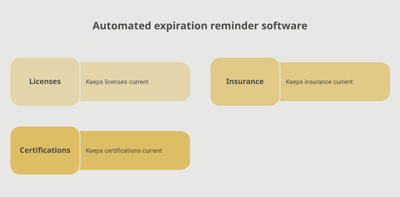
A dedicated tracking platform like Expiration Reminder stores each employee with their contract type, start and end dates, renewal limit (where applicable), responsible HR owner, and supporting documents. Reminders fire automatically before each end date.
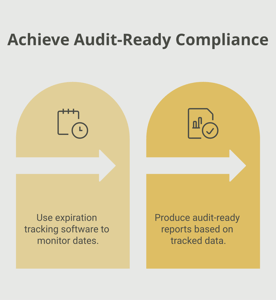
Key features include automated reminders at multiple intervals (90, 60, 30 days before contract end), document storage for offer letters and contracts, dashboard views by location, department, or contract type, audit-ready reports for HR and labor inspections, and the ability to log new contract dates in one step after each renewal.
Key Takeaways
- An employment contract is a written or implied agreement defining the terms of the employment relationship.
- Major structural types include at-will (U.S. default), indefinite (most non-U.S. defaults), and fixed-term.
- Fixed-term contracts have planned end dates; missing the end date often converts the relationship to indefinite by operation of law.
- Many jurisdictions limit consecutive fixed-term renewals before automatic conversion to indefinite.
- Global employers face especially complex tracking across different jurisdictional rules.
- Manual tracking via HRIS exports or spreadsheets fails at scale; automated tracking with reminders is the reliable approach.
Frequently Asked Questions
How long is an employment contract valid?
It depends on the contract type. At-will employment has no fixed end date. Fixed-term contracts have a specified end date (often 3, 6, 12, or 24 months). Indefinite contracts continue until either party terminates them with required notice or cause.
What is the difference between at-will and fixed-term employment?
At-will employment can be ended at any time by either party for any lawful reason, with no fixed end date. Fixed-term employment has a specified end date and typically defined termination-for-cause rules during the term.
What happens when a fixed-term contract expires?
If a new contract is in place, the relationship continues under the new terms. If the employee continues working without a new contract, many jurisdictions treat the relationship as having converted to indefinite by operation of law.
How often should fixed-term contracts be renewed?
It depends on the role, the project, and the jurisdiction. Many jurisdictions cap the number or duration of consecutive fixed-term renewals before automatic conversion to indefinite.
What is a contract renewal letter?
A formal document confirming that both parties agree to extend the employment beyond the original contract end date, typically with the same or amended terms.
What is the difference between an employment contract and an offer letter?
In at-will jurisdictions like most U.S. states, the offer letter (plus handbook acknowledgments) often serves as the employment contract. In fixed-term and indefinite-contract jurisdictions, a more formal employment contract is typically used.
How far in advance should I review a fixed-term contract?
Begin reviewing 60–90 days before the contract end date so renewal letters, conversion decisions, or end-of-term notices can be issued in time.
What happens if I let a fixed-term contract lapse unintentionally?
The relationship typically converts to indefinite by operation of law. The employer loses the planned exit point and may need to follow the local termination process if they later want to end the relationship.
Conclusion
Employment contracts are the legal foundation of every working relationship — and for fixed-term contracts, the calendar matters more than most other categories of contract because missing the end date can change the legal nature of the relationship itself. The substantive work — drafting terms, negotiating compensation, complying with local labor law — sits with HR and counsel. The administrative work — tracking every contract's end date and acting before it passes — is where most programs need help.
If your team tracks employment contracts through HRIS reports or spreadsheets, you already know how easy it is for one fixed-term end date to slip past. A purpose-built tracking platform like Expiration Reminder centralizes every contract, sends reminders before each end date, stores the supporting documents, and produces audit-ready reports the moment anyone asks.
Manage the relationships, plan the transitions, and let the system handle the calendar.