Introduction
If your business performs electrical work — residential, commercial, industrial, or controls — the electrical license is the state or local authority that authorizes the work. Most jurisdictions issue licenses at apprentice, journeyman, and master levels, with renewal cycles ranging from 1 to 3 years and code-cycle continuing education required to keep up with National Electrical Code updates.
This article explains what an electrical license is, the apprentice / journeyman / master framework, state-by-state variations, NEC code-cycle CE requirements, and the most practical way to track electrical licenses across an electrical contracting business.
For most electrical contractors and trade supervisors, individual renewals are well understood. The hard part is the calendar across multiple license levels, multiple states, and code-cycle CE deadlines.
What Is an Electrical License?
An electrical license is a state or local authorization permitting an individual or business to perform electrical work. Licensing is typically administered at the state level (by state electrical examining boards, state electrical contractor boards, or state licensing departments), with some jurisdictions adding city- or county-level requirements.
Most states issue licenses at multiple levels:
- Electrical Apprentice / Helper — entry-level workers in supervised training, typically registered with the state.
- Journeyman Electrician — qualified to perform electrical work under the supervision of (or as employee of) a licensed contractor.
- Master Electrician — qualified to operate as an electrical contractor or pull permits; typically requires significant journeyman experience (2-5 years).
- Electrical Contractor License — the business license to perform electrical contracting (often combined with master designation).
- Specialty licenses — limited residential, sign electrician, fire alarm, low-voltage, telecommunications, others depending on state.
The framework includes:
- National Electrical Code (NEC) / NFPA 70 — the comprehensive electrical safety code published by NFPA, updated every 3 years (NEC 2026 is the current edition in many states; NEC 2023 and 2020 still in use in others depending on state adoption).
- State electrical codes — adopt NEC with state-specific amendments.
- Local jurisdictions — may have additional inspections, permits, and licensing requirements.
Initial licensure typically requires:
- Experience / apprenticeship hours — typically 4,000-8,000 hours for journeyman, additional hours for master.
- Examination — state-specific journeyman or master exam covering NEC and state rules.
- Background check.
- Bond and insurance (for contractor-level licensure).
Renewal cycles:
- Annual — common in some states.
- Biennial — common in many states.
- Triennial — used in a few states.
Continuing education:
- Code-cycle CE — most states require CE addressing NEC updates each code cycle (every 3 years).
- Topic requirements — safety, accessibility, energy code, photovoltaic and energy storage system rules increasingly required.
- Hours per cycle — typically 8-24 hours depending on state and license level.
Why Electrical License Tracking Matters for Your Organization
Electrical license currency protects against three concrete risks: project disqualification, regulatory enforcement, and life-safety incidents.
From a project standpoint, public-works and private commercial projects require current licensure as a condition of contract award and permit issuance.
From a regulatory standpoint, state and local electrical inspectors verify licensure at permit pulls and inspections. Lapses trigger violations and stop-work orders.
From a life-safety standpoint, the electrical license framework exists because faulty electrical work causes fires, electrocutions, and other catastrophic outcomes. Licensure and CE are the primary controls.
For electrical contracting businesses, the license calendar across journeymen and masters is one of the most consequential operational controls.
Common Scenarios for Tracking Electrical License Expiration Dates
Electrical Contracting Businesses
Electrical contractors manage licenses for the contractor entity, the master electrician (often the qualifying party), and the journeymen working in the field.
Industrial and Commercial Electrical Operations
Industrial maintenance and commercial electrical operations manage licenses across electricians performing in-house and contracted work.
Multi-State Electrical Operations
Electrical contractors operating across state lines manage licenses in each state, often with different classifications and CE requirements.
Specialty Electrical Trades
Fire alarm, low-voltage, telecommunications, and sign electrical specialty contractors manage licenses specific to their scope.
Utility and Power Generation
Electrical utilities and power generation operations manage licensing for in-house workforces alongside contracted electrical service providers.
How Electrical License Tracking Benefits Your Organization
A reliable program produces measurable benefits.
For the company, current licenses preserve bidding eligibility, support clean inspection passage, and avoid regulatory enforcement.
For office managers and operations teams, the license calendar becomes predictable. Code-cycle CE is met before renewal. Insurance and bond renewals align with license renewals.
For electricians, predictable tracking supports their continued employment in licensed roles.
How to Track Electrical License Expiration Dates
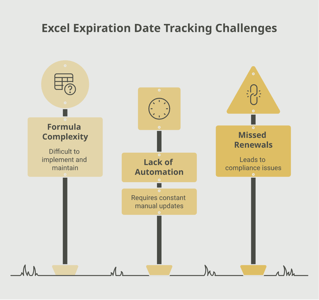
State licensing board databases provide license verification. Trade software and electrical contractor business platforms often include credential tracking.
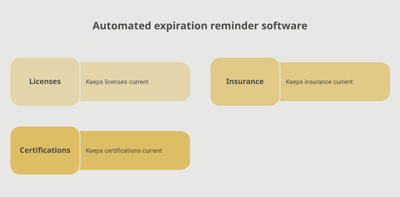
For organizations using a separate compliance tracker, a platform like Expiration Reminder stores each electrician with their license level (apprentice/journeyman/master), state, expiration, CE progress, code-cycle status, and supporting documents. Reminders fire automatically before each renewal.
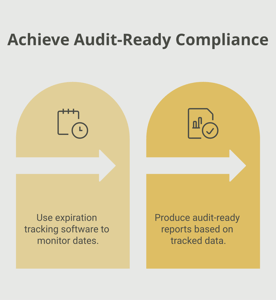
Key features include automated reminders at multiple intervals (180, 90, 60, 30 days), document storage for licenses and CE certificates, dashboard views by state, license level, or expiry window, audit-ready reports for state-board audits and project clients, and the ability to log renewals in one step.
Key Takeaways
- An electrical license is a state (and sometimes local) authorization permitting electrical work.
- License levels: apprentice/helper, journeyman, master, contractor, plus specialty categories.
- Framework: NEC / NFPA 70 (updated every 3 years) with state-specific amendments and code adoptions.
- Initial licensure: apprenticeship hours, examination, background check, bond and insurance (for contractor licenses).
- Renewal cycle: annual, biennial, or triennial depending on state.
- Code-cycle CE addresses NEC updates each 3-year cycle.
- Lapses prevent permit pulls, trigger inspection failures, and disqualify from public-works bidding.
Frequently Asked Questions
Who issues an electrical license?
State electrical examining boards or licensing departments. Some jurisdictions add city- or county-level licensing requirements.
What are the typical license levels?
Apprentice, journeyman, master, and contractor licenses are most common. Some states also issue specialty licenses (residential, sign, fire alarm, low-voltage, telecommunications).
How long is an electrical license valid?
Varies by state — annual, biennial, or triennial cycles are all used.
What is the NEC?
National Electrical Code, also known as NFPA 70 — the comprehensive electrical safety code published by NFPA, updated every 3 years and adopted (with amendments) by state and local jurisdictions.
How many CE hours are required?
Varies by state and license level — typically 8-24 hours per renewal cycle, including code-cycle CE addressing NEC updates.
Can I work in multiple states with one license?
Generally no. Each state issues its own license. Some states allow reciprocity or licensure-by-endorsement for electricians licensed in compatible states.
What is a master electrician?
A licensed electrician with sufficient experience (typically 2-5 years beyond journeyman) and additional examination authorizing operation as an electrical contractor or supervisor.
What happens if I work without a current license?
Fines, project disqualification, permit denial, possible criminal charges (in some states for unlicensed contracting), and insurance/bonding complications.
Conclusion
Electrical licensing is the safety-and-compliance foundation of every electrical contracting business. The substantive work — apprenticeship, examinations, NEC code mastery, project execution — sits with electricians, masters, and supervisors. The administrative work — knowing every electrician's license status, code-cycle CE progress, and renewal cycles across states — is where most electrical contractors need help.
If your team tracks electrical licenses through state-board sites or paper records, you already know how easy it is for one electrician's CE or renewal to slip past. A purpose-built tracking platform like Expiration Reminder centralizes every license, sends reminders before each renewal and code-cycle CE deadline, stores the supporting documents, and produces audit-ready reports the moment anyone asks.
License the workforce, master the code, and let the system handle the calendar.