Introduction
If your workforce includes commercial drivers, safety-sensitive roles, or any position subject to a drug-free workplace program, drug testing is a recurring compliance and HR activity that has to happen on schedule, by category, with proper documentation, and through certified providers. The DOT-regulated framework is especially unforgiving — a missed random test or a misclassified result can disqualify a driver.
This article explains what employment drug testing is, the DOT regulatory framework under FMCSA 49 CFR Part 382, the test categories (pre-employment, random, reasonable suspicion, post-accident, return-to-duty, follow-up), and the most practical way to track drug testing across a regulated workforce.
For most safety, fleet, and HR teams, ordering an individual test is well understood. The hard part is the calendar — tracking random-testing pools, return-to-duty programs, follow-up testing schedules, and DQ-file documentation.
What Is a Drug Test / Drug Screen?
A drug test (often called a drug screen) is a laboratory analysis of a biological specimen — most commonly urine, but also hair, oral fluid, or blood depending on the program — to detect the presence of controlled substances or their metabolites. In employment contexts, drug testing is governed by:
- FMCSA 49 CFR Part 382 — controlled substances and alcohol use and testing for commercial motor vehicle (CMV) drivers.
- 49 CFR Part 40 — the DOT procedural rules that govern all DOT-regulated testing (FMCSA, FAA, FRA, FTA, PHMSA, USCG).
- State drug-free workplace laws — some states regulate non-DOT employment drug testing.
- Employer-policy drug testing — many non-DOT employers run drug testing programs as part of broader HR policy.
The federally mandated DOT 5-panel screens for:
- Marijuana (THC).
- Cocaine.
- Amphetamines (including methamphetamine and MDMA).
- Opioids (codeine, morphine, heroin, oxycodone, hydrocodone, hydromorphone, oxymorphone).
- Phencyclidine (PCP).
DOT testing categories include:
- Pre-employment — required before the worker performs safety-sensitive functions.
- Random — minimum annual selection rates set by FMCSA (commonly 50% for drugs and 10% for alcohol of the driver pool).
- Reasonable suspicion — based on specific, contemporaneous, articulable observations.
- Post-accident — required after qualifying accidents.
- Return-to-duty — required after a violation, before returning to safety-sensitive duty, supervised by a Substance Abuse Professional (SAP).
- Follow-up — supervised by the SAP for a defined period after return-to-duty (typically minimum 6 unannounced tests in the first 12 months).
Drug test results themselves do not have an expiration date — they are point-in-time results. The schedule, not the individual test, is what requires ongoing tracking.
Why Drug Test Tracking Matters for Your Organization
Drug testing currency protects against three concrete risks: DOT compliance findings, safety incidents, and significant legal exposure.
From a DOT standpoint, missing random tests against quota, undocumented testing categories, and incomplete return-to-duty programs are common compliance findings.
From a safety standpoint, drug and alcohol use in safety-sensitive roles raises incident risk significantly. The testing program is the primary deterrent and detection control.
From a legal standpoint, employment drug testing must follow strict procedural rules to be defensible. Mishandled results, missed steps, or inadequate documentation can create employment-claims exposure.
For DOT-regulated motor carriers, the random-testing pool calendar is one of the most consequential compliance and safety controls in the operation.
Common Scenarios for Tracking Drug Test Dates
DOT-Regulated Motor Carriers
CMV operators run pre-employment, random, post-accident, and return-to-duty testing across the driver workforce. The random pool requires year-round selection and documentation.
Other DOT-Regulated Modes
Aviation (FAA), rail (FRA), transit (FTA), pipeline (PHMSA), and maritime (USCG) operations follow Part 40 procedural rules with mode-specific category requirements.
Non-DOT Safety-Sensitive Workforces
Construction, manufacturing, healthcare, security, and other industries often run employer-policy drug testing programs aligned with DOT procedures even when not federally required.
State Drug-Free Workplace Programs
Several states offer workers' compensation premium discounts for certified drug-free workplace programs, with specific testing protocols.
Federally Required Personnel
Federal employees, contractors, and grantees in safety-sensitive roles face additional federal drug-testing requirements under Executive Order 12564 and follow-on regulations.
How Drug Test Tracking Benefits Your Organization
A reliable program produces measurable benefits.
For the company, structured tracking satisfies DOT compliance, supports safer workplaces, and provides defensible documentation for employment-related claims.
For HR, safety, and fleet teams, the testing calendar becomes a planned activity. Random-pool selections are documented. Return-to-duty and follow-up programs run on schedule.
For workers, predictable and procedurally clean testing protects against errors that could affect their employment.
How to Track Drug Test Dates
DOT consortiums and TPAs (third-party administrators) manage random-pool selection and documentation for many carriers. Driver qualification file (DQF) software typically tracks test events.
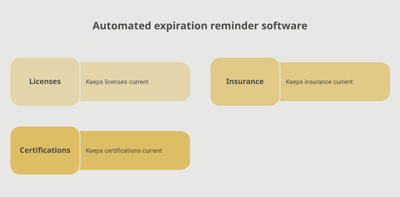
For organizations using a separate compliance tracker, a platform like Expiration Reminder stores each worker with their drug-testing history, return-to-duty status, follow-up schedule, supporting documents, and SAP referrals. Reminders fire automatically before scheduled testing milestones.
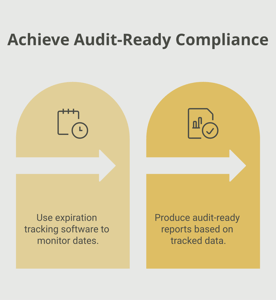
Key features include automated reminders at multiple intervals, document storage for test results and chain-of-custody forms, dashboard views by site, role, or pool, audit-ready reports for DOT compliance reviews, and the ability to log new testing events in one step.
Key Takeaways
- Drug testing in employment is governed by FMCSA 49 CFR Part 382 (commercial drivers), DOT 49 CFR Part 40 (procedural rules), state laws, and employer policy.
- The DOT 5-panel screens for marijuana, cocaine, amphetamines, opioids, and PCP.
- DOT categories: pre-employment, random, reasonable suspicion, post-accident, return-to-duty, follow-up.
- FMCSA random rates: 50% (drugs) and 10% (alcohol) of the driver pool annually.
- Return-to-duty programs require SAP supervision; follow-up testing minimums apply.
- Tracking is the calendar layer — individual tests do not "expire" but program-level scheduling matters.
Frequently Asked Questions
What does a DOT 5-panel test for?
Marijuana (THC), cocaine, amphetamines (including methamphetamine and MDMA), opioids, and phencyclidine (PCP).
How often does FMCSA require random drug testing?
FMCSA sets minimum annual random selection rates — currently 50% for drugs and 10% for alcohol of the driver pool. The selection happens throughout the year.
What is post-accident testing?
Testing required under FMCSA after qualifying accidents (typically involving a fatality, or citation issued to the CMV driver combined with bodily injury or vehicle disabling damage). Testing must be conducted within specific time windows.
What is a return-to-duty test?
A test required after a driver has tested positive or refused to test. The driver must complete a Substance Abuse Professional (SAP) program before returning. The return-to-duty test must be observed.
What is follow-up testing?
After return-to-duty, the SAP designs a follow-up testing schedule — minimum 6 unannounced tests in the first 12 months, potentially extending up to 60 months.
Are non-DOT drug tests subject to the same rules?
DOT procedural rules (Part 40) apply only to DOT-regulated testing. Non-DOT employer testing follows applicable state laws and employer policy. Many employers voluntarily follow DOT-like procedures for consistency.
How long should drug test records be kept?
FMCSA requires drug and alcohol testing records to be retained according to specific schedules in Part 382.401 — some records for 1 year, others 5 years. Positive test records must be kept 5 years.
What is a Substance Abuse Professional (SAP)?
A licensed or certified professional with specific training in DOT regulations who evaluates DOT-regulated employees who have violated drug or alcohol rules and prescribes treatment and follow-up testing schedules.
Conclusion
Drug testing is one of the most procedurally exacting compliance activities in any DOT-regulated or safety-sensitive workforce. The substantive work — collection, lab analysis, Medical Review Officer review — sits with certified providers and program administrators. The administrative work — knowing each driver's random-pool status, scheduled tests, return-to-duty status, and SAP follow-up program — is where most carriers and employers need help.
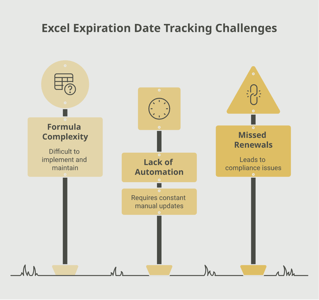
If your team tracks drug testing through TPA portals or spreadsheets, you already know how easy it is for a scheduled testing event to slip past. A purpose-built tracking platform like Expiration Reminder centralizes every worker's testing history, sends reminders before each milestone, stores the supporting documents, and produces audit-ready reports the moment anyone asks.
Test the workforce, document the program, and let the system handle the calendar.