Introduction
If your operations involve unmanned aircraft systems (UAS) — drone-based inspection, aerial photography, surveying, mapping, agricultural spraying, public safety, delivery, or any commercial drone use — drone insurance is the financial protection layer that pairs with FAA Part 107 certification and operating authority. Liability claims from drone incidents, hull damage to the aircraft itself, and payload coverage all need policies in place before commercial flight.
This article explains what drone insurance is, the FAA Part 107 framework, the types of coverage (liability, hull, payload), client-required coverage limits, and the most practical way to track drone insurance across a UAS operation.
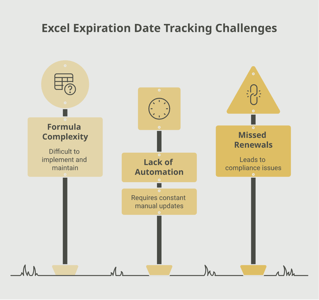
For most drone operators, obtaining initial coverage is well understood. The hard part is the calendar — knowing whose policy is approaching expiry and ensuring no flight occurs without current coverage that meets client requirements.
What Is Drone Insurance?
Drone insurance is commercial property and liability coverage specific to unmanned aircraft systems and their operations. Modern drone insurance typically combines:
- Liability coverage — for third-party bodily injury and property damage caused by drone operations. Typical limits: $1M-$10M per occurrence depending on operation and client requirements.
- Hull coverage — for physical damage to the drone itself (collision, crash, theft). Coverage typically replacement cost or actual cash value.
- Payload coverage — for cameras, sensors, lidar, and other attached equipment.
- Non-owned coverage — for operations using customer-owned or rented drones.
- Cyber and data coverage — for some commercial operations.
- Privacy liability — coverage for invasion-of-privacy claims related to drone operations.
The legal framework includes:
- FAA Part 107 — the federal regulation governing commercial drone operations in the U.S. Requires remote pilot certification.
- Part 137 — agricultural aircraft operations including drone-based spraying.
- FAA waivers — Beyond Visual Line of Sight (BVLOS), night operations, operations over people, and other waivers each have their own requirements.
- State and local regulations — privacy, trespass, and other laws can apply.
Commercial drone operators typically need insurance because:
- Client contracts — most commercial clients require proof of liability insurance ($1M-$5M typical minimums) before allowing drone work.
- Public-sector clients — government, utility, and similar clients often require higher limits ($5M-$10M).
- Hull value protection — commercial drones range from under $1,000 (DJI consumer) to $100,000+ (commercial sensor packages); hull coverage protects the investment.
- Operations over people — Part 107 Category 2-4 operations require additional safety analysis and typically increased coverage.
Validity:
- Annual policies are most common.
- Project-specific / on-demand policies — newer market entrants offer per-flight or per-day coverage for incidental drone operations.
- Endorsements — added during the policy year for specific high-risk operations (BVLOS, night, over people).
Why Drone Insurance Tracking Matters for Your Organization
Drone insurance currency protects against three concrete risks: client-contract violations, uncovered loss exposure, and operational shutdown.
From a client-contract standpoint, commercial drone work cannot proceed without proof of current insurance at contract limits. Lapsed coverage immediately disqualifies the operator from work.
From a loss standpoint, drone incidents (crashes, property damage, injuries) can result in significant liability exposure. Uncovered losses can be catastrophic for small operators.
From an operational standpoint, lapsed insurance may invalidate FAA waivers and Part 137 operating authority for some operators.
For commercial drone service providers, the insurance calendar is one of the most consequential operational controls.
Common Scenarios for Tracking Drone Insurance Expiration Dates
Commercial Drone Service Companies
Inspection, mapping, photography, and surveying companies running commercial UAS operations need continuous coverage.
Construction and Infrastructure
Construction firms and infrastructure operators using drones for progress monitoring, inspection, and surveying.
Agriculture
Agricultural drone operators (spraying, scouting, NDVI) typically operate under Part 137 with additional insurance considerations.
Public Safety
Police, fire, and search-and-rescue drone programs operate under public-aircraft rules but typically maintain insurance for operational protection.
Media and Entertainment
Film, broadcast, and news organizations using drones for aerial cinematography.
How Drone Insurance Tracking Benefits Your Organization
A reliable program produces measurable benefits.
For the company, current insurance maintains client-contract eligibility, supports FAA waiver compliance, and protects against catastrophic uncovered losses.
For operations and finance teams, the insurance calendar becomes predictable. Renewals are coordinated with policy reviews and broker conversations.
For clients, current Certificates of Insurance can be produced on demand — a standard procurement requirement.
How to Track Drone Insurance Expiration Dates
Insurance brokers specializing in aviation and UAS (BWI Aviation, SkyWatch, Verifly, Avion, Global Aerospace, others) typically send renewal notices 60-90 days before expiration.
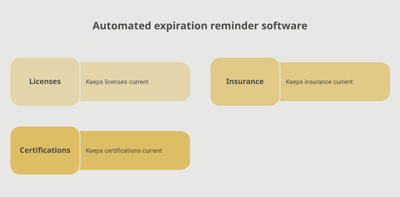
For organizations using a separate compliance tracker, a platform like Expiration Reminder stores each policy with carrier, broker, limits, expiration date, supporting documents, and waiver-related coverage requirements. Reminders fire automatically before each renewal.
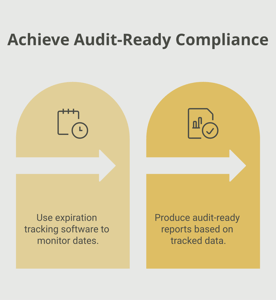
Key features include automated reminders at multiple intervals (90, 60, 30 days), document storage for policies and Certificates of Insurance, dashboard views by entity, operation type, or expiry window, audit-ready reports for client compliance, and the ability to log renewals in one step.
Key Takeaways
- Drone insurance is commercial property and liability coverage for unmanned aircraft systems and operations.
- Common components: liability, hull, payload, non-owned, cyber, privacy.
- Typical liability limits $1M-$10M depending on operation and client requirements.
- FAA Part 107 governs U.S. commercial drone operations; Part 137 governs agricultural.
- Most policies are annual; per-flight/per-day options exist for incidental use.
- Client contracts typically require proof of current insurance as a condition of work.
- Lapses disqualify from client work and create uncovered-loss exposure.
Frequently Asked Questions
Is drone insurance required by law?
The FAA does not require drone insurance for Part 107 operations. However, most commercial clients require it, and some states/localities require insurance for specific drone operations (notably agriculture).
What are typical liability limits?
$1M-$5M per occurrence is common for general commercial work. Higher limits ($5M-$10M+) are typical for public-sector, utility, and infrastructure clients.
What is hull coverage?
Insurance covering physical damage to the drone aircraft itself — collision, crash, theft, and similar losses.
Are FAA waivers covered automatically?
Specific waivers (BVLOS, night, over people) typically require additional underwriting or endorsements. Confirm with broker before flying waived operations.
Can I get per-flight drone insurance?
Yes. Newer market entrants (Verifly, SkyWatch) offer per-flight, per-day, or per-project coverage for incidental commercial use.
What is non-owned drone coverage?
Insurance covering operations the insured performs with drones they do not own — important for operators who rent or use customer-owned equipment.
How is drone insurance different from general aviation insurance?
Drone insurance is specialized for UAS operations — different risk profile, lower hull values for most operations, but with potential liability comparable to manned aviation for certain operations.
How do organizations track drone insurance?
Combinations of broker portals, commercial insurance trackers, and dedicated tracking platforms. The system that actively reminds before each renewal is the one that prevents most lapses.
Conclusion
Drone insurance is the financial protection layer for every commercial UAS operation. The substantive work — placing coverage, complying with FAA rules, operating safely — sits with operations, brokers, and remote pilots. The administrative work — knowing every policy expiration, producing COIs on demand, and managing waiver-related coverage — is where most drone operators need help.
If your team tracks drone insurance through broker emails or paper records, you already know how easy it is for one policy to slip past renewal. A purpose-built tracking platform like Expiration Reminder centralizes every policy, sends reminders before each renewal, stores the supporting documents, and produces audit-ready reports the moment anyone asks.
Cover the operations, fly safely, and let the system handle the calendar.