Introduction
If your organization employs anyone who drives — for deliveries, sales calls, service work, executive transport, or a company vehicle — a driving record is one of the most important pieces of due diligence in the hiring file. It is also one of the most commonly overlooked once the hire is made, even though the underlying record changes constantly as the driver operates on public roads.
This article explains what a driving record is, the rules behind employer access to it, who relies on it, how often it should be re-checked, and what happens when reviews fall behind. You will also see the most practical way to track driving record reviews across a workforce of drivers.
For most organizations, pulling the initial driving record at hire is routine. The hard part is staying current — re-checking on a schedule that matches insurance, regulatory, and policy requirements, and catching violations or license issues before they become safety, liability, or compliance problems.
What Is a Driving Record?
A driving record — also called a Motor Vehicle Record (MVR), driver abstract, or DMV abstract depending on the state — is an official report from the state department of motor vehicles documenting an individual's driving history. The report typically includes license class and status, expiration date, restrictions and endorsements, traffic violations, accidents, license suspensions or revocations, DUI convictions, and points on the license.
Driving records are issued by each state's DMV (or equivalent agency) and follow that state's reporting rules. Lookback periods vary by state — typically 3 to 7 years for most violations, though serious offenses (DUI, vehicular felonies) may appear indefinitely. The format and contents differ by state, but most reports include the core elements above.
When an employer obtains a driving record on an employee or applicant through a third-party background check provider, the request is governed by the federal Fair Credit Reporting Act. The employer must provide written disclosure, obtain written consent, and follow the FCRA adverse action process if the report contributes to an employment decision. Many states layer additional consent and disclosure requirements on top.
A driving record itself does not have a fixed expiration date. The validity is built into the review schedule the employer chooses — typically annually for routine driving roles, more frequently for safety-sensitive roles, and immediately upon any reportable event (accident, citation, license change).
Why Driving Records Matter for Your Organization
Driving records protect against three concrete risks: insurance exposure, regulatory non-compliance, and negligent hiring liability.
Commercial auto and fleet insurance carriers routinely require periodic MVR reviews on every covered driver. A driver with a deteriorating record can spike premiums, fall outside the carrier's underwriting criteria, or lose coverage entirely. The first time a fleet manager learns about a serious citation is often during the annual policy review — by which point the underwriter has already adjusted the renewal.
Regulatory compliance applies in industries where driving is regulated. DOT-regulated motor carriers must review each driver's MVR annually under FMCSA regulation § 391.25. Industries with state-specific driver requirements (school transportation, taxi and limousine, ride-share, package delivery in some jurisdictions) often impose their own review cadences.
Negligent hiring liability arises when an employer hires or retains a driver with a problematic record who then causes harm. The legal standard varies by jurisdiction, but documented, recent driving record reviews are a key element of the defense. A current review demonstrates the employer exercised reasonable diligence; a stale or missing review undermines that defense.
Common Scenarios for Tracking Driving Record Review Dates
Driving record tracking touches almost every employer with driving roles. Here are the contexts where keeping reviews current matters most.
Sales Teams and Field Service Workforces
Outside sales reps, field service technicians, and account managers often drive personal or company vehicles as a core part of the job. Employers carry insurance on these drivers (whether through a fleet policy or hired/non-owned auto coverage) and need current MVRs to maintain that coverage.
Delivery, Last-Mile, and Logistics
Courier services, food delivery, parcel delivery, and last-mile operations depend on dozens or hundreds of drivers. The driver base turns over quickly, and MVR currency directly affects insurance, contracts with shippers, and safety performance.
Service Trades and Home-Service Companies
Plumbing, HVAC, electrical, pest control, lawn care, and similar trades dispatch technicians in branded vehicles every day. Each technician's driving record affects insurance, public safety, and brand reputation.
Executive and Personal Transportation
Executive drivers, limo services, ride-share, and taxi operations have direct passenger-safety obligations and regulatory oversight. MVR review cadence is often weekly or continuous via subscription services.
Schools, Universities, and Public Sector
Schools, universities, and government agencies operating fleets — yellow buses, transit, light service vehicles — must review driving records under both general policy and state-specific regulatory requirements for public-sector drivers.
How Driving Record Reviews Benefit Your Company and Drivers
A well-run driving record program produces three layers of value.
For the company, current reviews support insurance compliance, reduce premiums by catching at-risk drivers early, support negligent hiring defenses, and maintain regulatory standing where MVRs are required. They also surface license issues (expirations, suspensions) before they create operational disruption.
For drivers, a periodic review is a fair, predictable expectation rather than a surprise. Drivers know the review is coming and can take ownership of their record. Programs that include driver coaching after a flagged event measurably reduce future incidents.
For customers and the public, drivers with current and clean records translate into safer roads, fewer incidents, and stronger trust in the organizations that deploy them.
How to Track Driving Record Review Dates
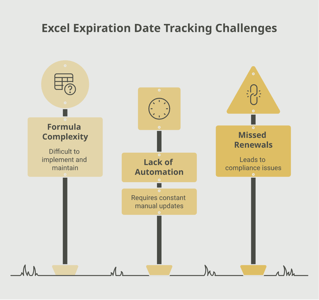
The most common tracking method is an HR or safety lead pulling MVRs annually on a calendar reminder and saving the reports in the driver's file. This works at small scale but loses information — the next-due date is rarely tracked separately from the last-pulled date.
Some organizations subscribe to continuous MVR monitoring services that alert the employer to any change in the driver's record. This is powerful for high-volume operations but does not replace the document-management side: the change notification still needs to drive an HR or safety action, and the underlying records need to be filed and produced on demand.
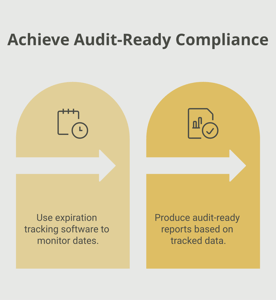
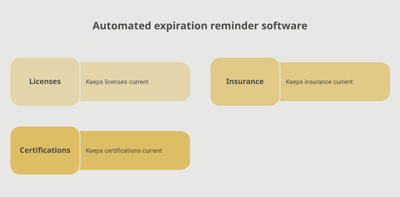
A dedicated tracking platform like Expiration Reminder stores each driver with their license number, license expiration, last MVR review date, next-due date, and the actual record. Reminders fire automatically before each review date, overdue drivers appear on a dashboard, and reports support insurance and audit requests.
The features that matter most for driving record tracking include automated reminders at configurable intervals (commonly 60, 30, and 0 days before next review), document storage so each MVR is attached to the driver record, dashboard views by location, role, or license class, audit-ready reports of MVR currency across the driving workforce, and the ability to log a new review and reset the next-due date in one step.
The aim is straightforward: every driver, every review on time, every record retrievable.
Key Takeaways
- A driving record (MVR) is an official report from the state DMV documenting a driver's license status and history.
- Employer access to driving records via a third-party screening service is governed by FCRA, with state-specific overlays.
- Lookback periods vary by state — typically 3–7 years for most violations.
- Insurance carriers, DOT-regulated industries, and many state-specific industries require periodic MVR reviews.
- Stale or missing reviews undermine negligent-hiring defenses and can affect insurance underwriting.
- Manual tracking via spreadsheets or HR memory fails at scale; automated tracking with reminders and document storage is the reliable approach.
Frequently Asked Questions
How often should I check an employee's driving record?
Most organizations review MVRs annually for routine driving roles, more frequently (semi-annually or quarterly) for safety-sensitive roles, and immediately upon any reportable event. DOT-regulated employers must review MVRs annually under FMCSA § 391.25.
What does a driving record include?
A driving record typically includes license class and status, expiration date, restrictions and endorsements, traffic violations, accidents, license suspensions or revocations, DUI convictions, and points on the license. Specific contents vary by state.
Do I need the driver's permission to pull an MVR?
Yes. Under the federal Driver's Privacy Protection Act (DPPA) and FCRA when using a third-party screening service, you must obtain written consent before pulling an MVR for employment purposes. Many states impose additional consent requirements.
How far back does a driving record go?
Lookback periods vary by state — typically 3 to 7 years for most violations. Some states report all reportable incidents indefinitely; others limit reporting to 3 years. Serious offenses (DUI, vehicular felonies) often appear longer or indefinitely.
What is the difference between a driving record and an MVR?
The two terms are often used interchangeably. "MVR" (Motor Vehicle Record) is the more common label in employer and insurance contexts. "Driving record" or "driver abstract" is the more common consumer term. Both refer to the official DMV report.
What is continuous MVR monitoring?
Continuous monitoring is a subscription service that alerts the employer to changes in a driver's record (citations, suspensions, license issues) as they occur, rather than waiting for the next periodic review. It is common in DOT-regulated fleets and high-volume driving operations.
What happens if I retain a driver with a bad record?
You may face increased insurance premiums, loss of coverage, regulatory citations (in DOT-regulated settings), and significant negligent-hiring exposure if the driver later causes harm. Most employers establish written criteria for acceptable driving records and adverse-action procedures for drivers who fall outside them.
Can I obtain a driving record directly from the DMV?
Yes, in many states. However, many employers use third-party screening services for consistency, FCRA compliance, multi-state coverage, and integration with their HR systems.
Conclusion
Driving records are the foundation of any safe and compliant driving workforce. The substantive work — defining acceptable criteria, training drivers, responding to citations — sits with HR, safety, and operations. The administrative work — tracking who has been reviewed, when, and when the next review is due — is the part where most programs stumble.
If your team is tracking driving records through HR files, a spreadsheet, or memory, you already know how fragile that becomes as the workforce grows. A purpose-built tracking platform like Expiration Reminder centralizes every driver, sends reminders before each review date, stores the records, and produces audit-ready reports the moment anyone asks.
Keep the records current, keep the drivers safe, and let the system handle the calendar.