Introduction
If your workforce includes anyone who drives for work — outside sales, field service, delivery, executive transport, fleet drivers (CDL covered separately) — driver's license verification is part of employment, insurance, and (for many roles) operational compliance. With REAL ID enforcement now in effect, the calendar around driver's licenses matters more than it has historically.
This article explains what a driver's license is, the state DMV framework, REAL ID compliance, typical 4-8 year validity, employer I-9 use, and the most practical way to track driver's license status across a workforce.
For most HR and fleet teams, license verification at hire is well understood. The hard part is the calendar — knowing whose license is approaching expiry and supporting workers through renewal in time.
What Is a Driver's License?
A driver's license is a state-issued document authorizing an individual to operate a motor vehicle. Issued by state Departments of Motor Vehicles (DMVs) or equivalent agencies, the driver's license serves multiple purposes beyond authorization to drive:
- Driving authorization — operating cars, light trucks, motorcycles (with endorsement), and other non-commercial vehicles.
- Primary identity document — most widely-held government-issued ID in the US.
- Form I-9 List B document — establishes identity for employment verification (combined with a List C document for work authorization).
- REAL ID-compliant — when meeting standards, valid for TSA domestic flight boarding and federal facility access.
- Age verification — for alcohol, tobacco, age-restricted activities.
- Banking and financial services — KYC identification.
- Voting — in states with voter ID requirements.
The REAL ID Act of 2005 established minimum security standards for state-issued driver's licenses. After multiple enforcement delays, REAL ID enforcement began May 7, 2025 for TSA and federal-facility purposes. Workers without a REAL ID-compliant license must use an alternative federally-accepted ID (passport, military ID, permanent resident card) for these purposes.
Validity periods vary by state:
- Most states — 4-8 years.
- Illinois — 4 years.
- Arizona — issued to expire on holder's 65th birthday (for non-REAL ID licenses).
- California — 5 years.
- Many states — tied to the holder's birthday.
Some states issue REAL ID-compliant licenses with the same validity as non-REAL ID; some states require in-person renewal for the first REAL ID issuance.
Renewal:
- Advance renewal — most states allow renewal up to 6 months early; some up to 1 year.
- Online renewal — common for non-REAL ID renewals and out-of-cycle renewals.
- In-person renewal — typically required for first REAL ID issuance.
- Vision test — most states require vision testing at renewal (or attestation).
- Senior renewal rules — some states impose more frequent renewals or in-person requirements for older drivers.
Driver's license endorsements and restrictions can apply (motorcycle endorsement, corrective lenses, no manual transmission, etc.) — distinct from the CDL endorsements that apply to commercial driving.
Why Driver's License Tracking Matters for Your Organization
Driver's license currency protects against three concrete risks: insurance and liability exposure, I-9 reverification gaps, and operational disruption.
From an insurance standpoint, employees driving for work must hold current driver's licenses for insurance to apply. Many fleet and commercial auto policies require periodic MVR verification.
From an I-9 standpoint, an expired driver's license used for Form I-9 verification can create reverification obligations (depending on how the license was used).
From an operational standpoint, employees who cannot drive cannot perform driving-required job duties. Service technicians, delivery drivers, outside sales, and other roles depend on current licensure.
For employers with driving workforces, fleet operators, and any organization requiring identity verification, the driver's license calendar is a meaningful HR-compliance and operational control.
Common Scenarios for Tracking Driver's License Expiration Dates
Outside Sales and Field Service
Sales reps, field service technicians, account managers, and other workers driving on company business need current licenses.
Delivery and Last-Mile
Delivery and last-mile operations with non-CDL drivers manage driver's licenses alongside MVR tracking.
Executive Transport
Executive drivers and limo services manage licenses alongside additional endorsements and (in some jurisdictions) chauffeur licenses.
Public Sector and Government Drivers
Government employees who drive for work face state-specific licensing requirements.
General Employer I-9 Compliance
Any employer running structured I-9 verification benefits from tracking license expirations among other identity documents.
How Driver's License Tracking Benefits Your Organization
A reliable program produces measurable benefits.
For the company, current licenses support insurance compliance, reduce liability exposure, and prevent operational disruption.
For HR, fleet, and operations teams, the license calendar becomes predictable. Workers approaching expiration are prompted to renew before driving roles are affected.
For workers, predictable tracking helps them manage personal renewals alongside work responsibilities.
How to Track Driver's License Expiration Dates
State DMV portals provide license-status verification. Many HRIS and fleet management systems track driver's license data as part of broader employee or driver records.
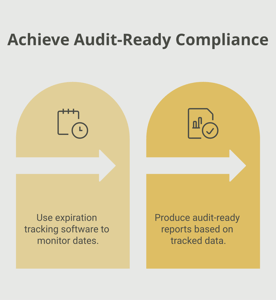
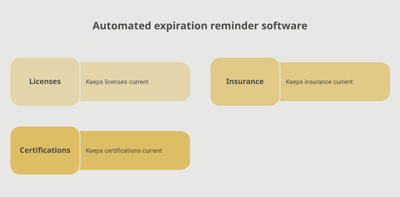
For organizations using a separate compliance tracker, a platform like Expiration Reminder stores each worker with their license type (state, REAL ID status), expiration, endorsements, restrictions, and supporting documents. Reminders fire automatically before each renewal date.
Key features include automated reminders at multiple intervals (180, 90, 60, 30 days), document storage for license copies with appropriate confidentiality, dashboard views by location, role, or REAL ID status, audit-ready reports for I-9 compliance, and the ability to log renewals in one step.
Key Takeaways
- A driver's license is a state-issued document authorizing operation of motor vehicles.
- Issued by state DMVs or equivalent agencies.
- Validity varies by state: typically 4-8 years; some states use age-based or birthday-based rules.
- The REAL ID Act sets minimum security standards; REAL ID enforcement began May 7, 2025 for TSA and federal-facility purposes.
- Driver's licenses are List B documents for Form I-9 employment verification (must be combined with List C for work authorization).
- Multi-state employers face varying state rules; centralized tracking matters.
Frequently Asked Questions
How long is a driver's license valid?
Varies by state — typically 4 to 8 years. Some states tie expiration to the holder's birthday.
What is a REAL ID?
A driver's license or ID card meeting the security standards of the REAL ID Act of 2005. Marked with a star in the upper portion (specific symbol varies slightly by state).
When did REAL ID enforcement begin?
May 7, 2025. TSA now requires REAL ID-compliant identification for domestic flights; federal facility access also requires it. Workers without REAL ID can use alternative federally-accepted IDs.
Can I renew online?
Many states allow online renewal for non-REAL ID renewals and out-of-cycle renewals. The first REAL ID-compliant issuance typically requires in-person renewal.
Does my license affect I-9 employment verification?
Yes. A driver's license is a List B document establishing identity for Form I-9. Must be combined with a List C document for work authorization. An expired license used for I-9 verification can create reverification obligations.
What is the difference between a driver's license and a commercial driver's license (CDL)?
A standard driver's license authorizes non-commercial vehicle operation. A CDL is required to operate commercial motor vehicles (typically 26,001+ lbs GVWR/GCWR, HAZMAT placarded, or 16+ passenger vehicles) and is federally regulated under FMCSR.
How early can I renew?
Most states allow renewal up to 6 months before expiration; some up to 1 year.
What happens if my license expires?
Driving with an expired license can result in tickets, fines, and (in some jurisdictions) license-suspension consequences. Insurance and employment-driving authorization can also be affected.
Conclusion
The driver's license is the most widely-held credential in the US workforce — and the calendar around it touches both personal and professional life. The substantive work — applying, passing tests, completing renewals — sits with the individual driver. The administrative work for employers — knowing whose license is approaching expiration and supporting renewal in time — is where most HR programs need help, particularly for employees in driving roles.
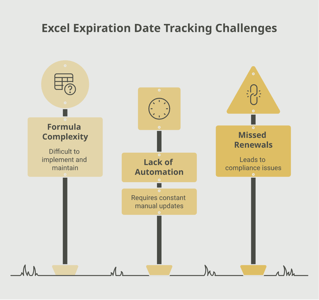
If your team tracks driver's licenses through HRIS or paper records, you already know how easy it is for one worker's license to slip past. A purpose-built tracking platform like Expiration Reminder centralizes every worker's license, sends reminders before each renewal, stores the supporting documents with appropriate confidentiality controls, and produces audit-ready reports the moment anyone asks.
License the drivers, support the renewals, and let the system handle the calendar.