Introduction
If your organization credentials or employs dentists — dental practices, DSOs, dental health programs, hospitals with dental services — the dental license is the foundation of every clinical activity. Each state issues its own dental license, renewal cycles vary from annual to triennial, and CE requirements add their own deadlines on top.
This article explains what a dental license is, the state dental board framework, typical renewal cycles, CE requirements, regional examination boards (ADEX, CIF, WREB), and the most practical way to track dental licenses across a dental workforce.
For most dental practice managers and DSO credentialing teams, primary-source verification at hire is well understood. The hard part is the calendar — knowing every dentist's renewal status and CE progress.
What Is a Dental License?
A dental license is a state-issued authorization permitting an individual to practice dentistry. Licensure is administered by state dental boards (sometimes called Boards of Dental Examiners, Boards of Dentistry, or similar), each with its own statutes and rules.
Initial licensure typically requires:
- DDS or DMD degree from a CODA-accredited dental school.
- National Board Dental Examinations (NBDE) — Parts I and II, or the integrated INBDE (now the standard).
- Clinical examination — most states accept a regional board exam: ADEX (American Dental Examinations), CIF (Central Regional Dental Testing Service), WREB (Western Regional Examining Board), or CDCA-WREB-CITA (combined organization).
- Background check and good moral character.
- Some states: jurisprudence exam covering state dental law.
Renewal requirements:
- Renewal cycle — varies by state from annual to 3 years; 2 years is common.
- Continuing Education (CE) — typically 20-50 hours per cycle, with specific required topics (medical emergencies, infection control, opioid prescribing, others depending on state).
- Renewal fees vary by state, typically $200-$800 per cycle.
Specialty practice (orthodontics, endodontics, oral surgery, periodontics, prosthodontics, pediatric dentistry, dental public health, oral medicine, oral and maxillofacial radiology, oral and maxillofacial pathology) typically requires additional training and (in some states) a specialty license or specialty announcement.
Dental hygienists and dental assistants are typically licensed or certified separately under state-specific rules. Dental hygienists generally need a DH degree, hygiene board exams, and state licensure with CE requirements. Dental assistants vary widely — some states require certification (CDA), others do not.
Licensure-by-credentials and licensure-by-endorsement are common pathways for dentists licensed in one state seeking practice in another. The American Dental Association (ADA) supports broader license-portability initiatives.
Why Dental License Tracking Matters for Your Organization
Dental license currency protects against three concrete risks: practice without authority, payer-claim issues, and dental board enforcement.
From a practice standpoint, an unlicensed dentist cannot legally provide clinical care. Continuing to allow practice without a current license violates state law.
From a payer standpoint, dental insurance plans verify licensure as part of provider credentialing. Lapses can affect network status and claim reimbursement.
From an enforcement standpoint, state dental boards conduct audits and respond to complaints. Lapsed licensure or CE non-compliance can trigger investigation and disciplinary action.
For dental practices, DSOs, and dental hygiene programs, the dental license calendar across the workforce is a core operational and compliance control.
Common Scenarios for Tracking Dental License Expiration Dates
Dental Service Organizations (DSOs)
DSOs managing multiple practices across multiple states face concentrated credentialing complexity. Each dentist may hold licensure in multiple states.
Single-Practice Dental Offices
Smaller dental practices manage licenses for the dentist owner(s), associate dentists, hygienists, and (in applicable states) dental assistants.
Hospital Dental Programs
Hospitals with dental services manage dental licensure alongside medical staff credentialing.
Dental Schools and Academic Practices
Dental schools and academic dental clinics credential faculty, residents, and (in some states) students under faculty license.
Dental Public Health and Mobile Dental Programs
Public health dental programs and mobile dental units must verify licensure in each state where care is delivered.
How Dental License Tracking Benefits Your Organization
A reliable program produces measurable benefits.
For the company, current licenses support payer credentialing, regulatory compliance, and clean state-board interactions.
For practice managers, HR, and credentialing teams, the license calendar becomes predictable. CE deadlines align with renewal cycles. New-hire credentialing fits into a structured process.
For dentists and hygienists, predictable tracking supports their continued practice.
How to Track Dental License Expiration Dates
State dental board databases provide primary-source verification. Dental practice management software (Dentrix, Eaglesoft, Open Dental, Curve Dental, others) often includes credential-tracking features. DSO-specific credentialing platforms add multi-practice workflows.
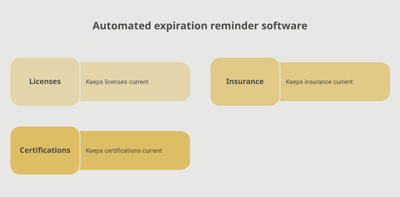
For organizations using a separate compliance tracker, a platform like Expiration Reminder stores each clinician with their license(s), state(s), expiration, CE progress, DEA registration (for prescribers), specialty announcements, and supporting documents. Reminders fire automatically before each renewal and CE milestone.
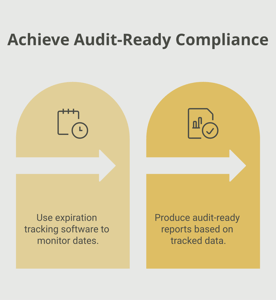
Key features include automated reminders at multiple intervals (180, 90, 60, 30 days), document storage for licenses and CE certificates, dashboard views by practice, role, or expiry window, audit-ready reports for state board audits, and the ability to log renewals in one step.
Key Takeaways
- A dental license is a state-issued authorization permitting an individual to practice dentistry.
- Administered by state dental boards (Boards of Dental Examiners, Boards of Dentistry).
- Initial licensure: DDS or DMD from a CODA-accredited dental school, NBDE/INBDE, regional clinical examination (ADEX, CIF, WREB, CDCA-WREB-CITA), background check.
- Renewal cycle varies: annual to 3 years; 2 years is common.
- Continuing Education (CE) typically 20-50 hours per cycle.
- Dental specialty practice typically requires additional training and (in some states) a specialty license.
- Dental hygienists and (in some states) dental assistants have their own licensure or certification.
- Lapses prevent practice, affect payer status, and trigger state-board enforcement.
Frequently Asked Questions
Who issues a dental license?
The state dental board in the state where the dentist practices.
How long is a dental license valid?
Varies by state from annual to 3 years; 2 years is common.
What are dental CE requirements?
State-required continuing education hours per renewal cycle, typically 20-50 hours covering clinical updates, infection control, medical emergencies, opioid prescribing, and other topics depending on state.
What is ADEX?
The American Dental Examinations — one of the regional board examination organizations whose clinical exam is accepted by many state dental boards for initial licensure. Others include CIF and WREB (now combined as CDCA-WREB-CITA).
What is the INBDE?
The Integrated National Board Dental Examination — the standard national dental board examination administered by the Joint Commission on National Dental Examinations (JCNDE), replacing the previous NBDE Parts I and II.
Do dental specialists need separate licenses?
In some states yes — a separate specialty license is issued for recognized specialties. In other states, the general dental license is used with a specialty announcement. Requirements vary by state and specialty.
What is licensure by credentials / endorsement?
Licensure pathways allowing a dentist licensed in one state to obtain licensure in another based on existing credentials, exam history, and practice experience — typically faster than re-examining.
How do organizations track licenses across many dentists?
Combinations of state-board sites, practice management software, DSO credentialing platforms, and dedicated tracking systems. The system that actively reminds before each renewal is the one that prevents most lapses.
Conclusion
Dental licensure is the foundation of every dental practice. The substantive work — completing CE, applying for renewals, maintaining good standing — sits with the dentists themselves. The administrative work — knowing every clinician's license status, scheduling renewals, and tracking CE — is where most practices and DSOs need help.
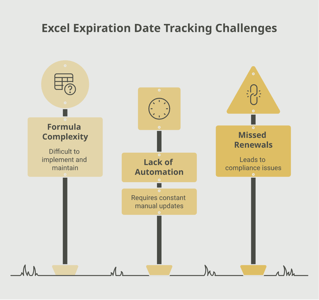
If your team tracks dental licenses through state-board sites or paper records, you already know how easy it is for one clinician's renewal to slip past. A purpose-built tracking platform like Expiration Reminder centralizes every clinician's licensure record, sends reminders before each renewal and CE deadline, stores the supporting documents, and produces audit-ready reports the moment anyone asks.
License the practice, complete the CE, and let the system handle the calendar.