Introduction
If your operations involve tanks, vaults, manholes, pits, silos, vessels, sewers, or any space where workers must enter to perform service, maintenance, or rescue, confined space training is the OSHA-mandated control between workers and a class of incidents that kill multiple people every year — often the would-be rescuers as much as the original entrant. Confined space training is role-specific, fact-specific, and missing or stale training is among OSHA's most cited general-industry findings.
This article explains what confined space certification is, the OSHA standards behind it, the distinct training requirements for entrants, attendants, and entry supervisors, and the most practical way to track training across a workforce.
For most safety and EHS teams, delivering initial training is well understood. The hard part is the calendar — knowing whose training is current, which workers are trained for which roles, and which sites have qualified attendants and supervisors available for planned entries.
What Is Confined Space Certification?
Confined space training is workplace training required for workers entering or supporting entry into permit-required confined spaces. The applicable U.S. standards are:
A "confined space" under OSHA has three characteristics: large enough to bodily enter, limited or restricted means of entry/exit, and not designed for continuous occupancy. A "permit-required confined space" adds one or more of: actual or potential hazardous atmosphere; potential for engulfment; internal configuration that could trap or asphyxiate; or any other recognized serious safety or health hazard.
The standards define three role categories, each with specific training:
- Authorized Entrants — workers who enter the permit space. Training covers the hazards faced, the use of equipment, communications, alarm recognition, exit triggers, and signs/symptoms of exposure.
- Attendants — workers stationed outside the space monitoring entrants. Training covers attendant duties, monitoring, communication, summoning rescue, and the prohibition against entering the space themselves.
- Entry Supervisors — the person responsible for authorizing entry, verifying conditions, and terminating entry. Training covers permit completion, hazard recognition, atmospheric monitoring, and overall responsibility.
A single person can serve in more than one role if trained and equipped for each role they fill.
Training must include:
- A written certification of training including the name of the employee, signatures of the trainers, and the date of training.
- Retraining when there is reason to believe deviations from procedures or skill deficiencies exist; when changes in operations create new hazards; or when new procedures are implemented.
OSHA does not specify a fixed annual retraining cycle, but employers commonly adopt an annual refresher as best practice.
Why Confined Space Certification Matters for Your Organization
Confined space training currency protects against three concrete risks: catastrophic entrant and rescuer fatalities, OSHA citations, and project shutdowns.
From a safety standpoint, confined space incidents kill multiple workers every year — and a significant share of fatalities are would-be rescuers who entered the space without training, equipment, or rescue protocols. Training is the primary control supporting both safe entry and disciplined rescue response.
From a regulatory standpoint, 1910.146 is consistently among OSHA's most cited general-industry standards. Permit deficiencies, untrained attendants, and missing rescue arrangements are common findings.
From an operational standpoint, entries cannot proceed without trained personnel in each required role. Workforce planning depends on knowing who is qualified for which role at each site.
For organizations operating wastewater, utilities, manufacturing, refining, food processing, marine, and similar industries, the confined space training calendar is a foundational operational control.
Common Scenarios for Tracking Confined Space Certification Dates
Wastewater and Utilities
Wastewater operators, water utilities, and gas utilities perform routine entries into manholes, lift stations, vaults, and digesters. Each role requires current training.
Manufacturing and Process
Manufacturing operations require entries into reactors, tanks, hoppers, silos, and process vessels. Both routine maintenance and major shutdowns drive entry volume.
Refining and Petrochemicals
Refineries and petrochemical plants perform large numbers of vessel entries during turnarounds, with strict permit and training requirements supplementing OSHA.
Marine and Shipyard
Shipyard confined space entry has its own OSHA framework (29 CFR 1915 Subpart B) covering shipboard spaces with industry-specific characteristics.
Construction
Construction confined space entry (sewers, manholes, pits, trenches > certain depths in some cases) is covered by 1926 Subpart AA with additional multi-employer requirements.
How Confined Space Tracking Benefits Your Organization
A reliable tracking program produces measurable benefits.
For the company, current training records support OSHA compliance, reduce catastrophic-incident risk, and preserve operational readiness for planned and emergency entries.
For safety, EHS, and operations teams, the training calendar becomes predictable. Refresher training is scheduled before annual cycles. Workforce planning matches qualified roles to planned entries.
For workers, predictable training reinforces critical knowledge in work where errors are unforgiving.
How to Track Confined Space Certification Expiration Dates
Learning management systems track training completions. Permit-management systems and safety platforms often integrate confined space data with permit issuance.
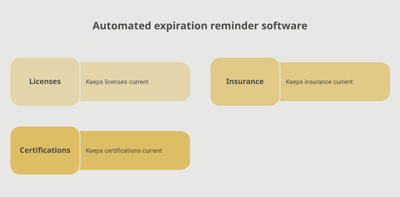
For organizations using a separate compliance tracker, a platform like Expiration Reminder stores each worker with their confined space training by role (entrant, attendant, entry supervisor), training date, next-due date, and supporting documents. Reminders fire automatically before each refresher.
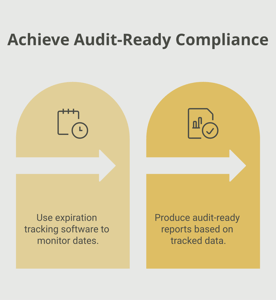
Key features include automated reminders at multiple intervals (90, 60, 30 days), document storage for training records and entry permits, dashboard views by site, role, or expiry window, audit-ready reports for OSHA, and the ability to log new training events in one step.
Key Takeaways
- Confined space certification is OSHA-mandated training for workers entering or supporting entry into permit-required confined spaces.
- Applicable standards: 1910.146 (general industry), 1926 Subpart AA (construction), and 1915 Subpart B (shipyard).
- Three role categories: authorized entrant, attendant, entry supervisor — each with role-specific training.
- A single person may serve in more than one role if trained and equipped for each.
- Training certification must include name, trainer signatures, and date; retraining required on triggers but no fixed annual cycle.
- Rescue planning and rescuer training are critical — most confined space fatalities include would-be rescuers.
- Automated tracking with reminders is the reliable approach for any confined-space-exposed workforce.
Frequently Asked Questions
What is a permit-required confined space?
A confined space that has one or more of: an actual or potential hazardous atmosphere; material that could engulf; internal configuration that could trap; or any other recognized serious hazard.
What are the three confined space roles?
Authorized entrant (enters the space), attendant (stationed outside monitoring entrants), and entry supervisor (authorizes entry, verifies conditions, terminates entry).
Can one person serve multiple roles?
Yes, as long as the person is trained and equipped for each role they fill. Common combinations include entry supervisor serving as attendant, or entry supervisor serving as entrant.
Does OSHA require annual confined space refresher training?
No fixed annual interval, but refresher training is required on specific triggers (new hazards, new procedures, deviations or deficiencies identified). Many employers adopt annual refresher as best practice.
What is atmospheric testing?
Pre-entry and continuous testing of the space's atmosphere for oxygen content, flammable gases or vapors, and toxic substances. Testing is required before entry and (in most cases) continuously during entry.
What is rescue planning?
OSHA requires the employer to ensure means and personnel are available to rescue entrants in case of emergency — through in-house rescue teams, contracted external rescue services, or self-rescue procedures where appropriate. Rescue capability is a permit prerequisite.
How long should confined space training records be kept?
OSHA does not specify a retention period in 1910.146. Most employers retain records for the duration of employment plus several years to support multi-year audits and legal defenses.
What is the difference between permit-required and non-permit confined spaces?
A non-permit confined space has the basic confined space characteristics (size, limited entry/exit, not designed for continuous occupancy) but does not have the hazards that make it permit-required. Conditions can change — reclassification may be needed.
Conclusion
Confined space certification is one of the highest-stakes safety credentials in any operation requiring entry into tanks, vessels, vaults, or similar spaces. The substantive work — delivering training, completing permits, planning rescues, monitoring atmospheres — sits with safety, EHS, and field leadership. The administrative work — knowing every worker's role-specific training status and ensuring qualified personnel are available for each planned entry — is where most programs need help.
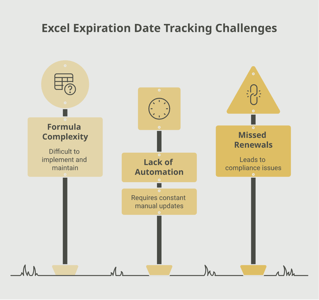
If your team tracks confined space training through LMS or spreadsheets, you already know how easy it is for one worker's training to lapse or for an entry to be scheduled without the right qualified personnel. A purpose-built tracking platform like Expiration Reminder centralizes every training record, sends reminders before each refresher, stores the supporting documents, and produces audit-ready reports the moment anyone asks.
Train the workforce, plan the entries, and let the system handle the calendar.