Introduction
If your business sells services to other businesses — agency work, consulting, professional services, managed services, SaaS implementations, or any retained relationship — the client contract is the legal agreement that defines the relationship from your side. When a client contract is mismanaged, the revenue, the scope creep, the missed renewal, and the messy exit all start at the same place: an end date that nobody tracked.
This article explains what a client contract is from the service provider's perspective, how renewal options typically work, what auto-renewal clauses look like, and the most practical way to track client contracts across a portfolio.
For most account management and operations teams, knowing the contract is in place is well understood. The hard part is the calendar — knowing every contract's renewal date, every termination-notice deadline, and every up-sell or cross-sell window.
What Is a Client Contract?
A client contract — from the service provider's perspective — is a legal agreement between the provider and a paying client that defines what services will be delivered, on what terms, for what compensation, and over what period. The contract typically combines a Master Service Agreement (MSA) covering legal terms with one or more Statements of Work (SOW), Order Forms, or Schedules covering specific engagements.
Common client contract elements include:
- Services scope — what is being delivered (often referenced in the SOW).
- Term — initial period, renewals, termination.
- Fees and payment — pricing, invoicing schedule, late payment.
- Service levels — uptime, response times, quality measures.
- Intellectual property — ownership of pre-existing IP and new work product.
- Confidentiality — both directions of information protection.
- Data protection — how client data is handled (especially for SaaS and managed services).
- Indemnification and liability — caps and carve-outs.
- Termination — for cause, for convenience, and at end of term.
Client contracts vary widely by industry. Agency client contracts often run on annual cycles with auto-renewal. Consulting engagements may be project-length with discrete SOWs. SaaS client contracts typically run 1, 2, or 3 years with auto-renewal clauses. Managed service agreements often run multi-year with annual review checkpoints.
When a client contract approaches end of term without renewal action, several things happen depending on the contract structure. Auto-renewal clauses extend the contract for another term unless notice is given (often 60–90 days before the renewal date). Non-renewing terms simply end at the date, with continued performance treated as an implied extension or a new arrangement. Either way, missing the calendar costs money or relationships.
Why Client Contract Tracking Matters for Your Organization
Client contract currency protects against three concrete risks: revenue leak, scope ambiguity, and missed expansion opportunity.
From a revenue standpoint, missing a client renewal can mean an unexpected month or quarter of unbilled work, a customer churn event, or a re-pricing opportunity lost. Annual recurring revenue (ARR) calculations in service businesses depend on accurate renewal dates.
From a scope standpoint, an expired contract whose terms continue informally invites scope creep, billing disputes, and IP confusion. Clean renewals preserve clear scope.
From an expansion standpoint, renewal time is the most natural moment to discuss expanded scope, additional SOWs, or cross-sell opportunities. Missing the renewal window means missing the conversation.
For service businesses with dozens or hundreds of active clients, the contract calendar is one of the most important operational systems they run.
Common Scenarios for Tracking Client Contract Expiration Dates
Marketing and Creative Agencies
Agencies typically run retainer relationships with annual or multi-year terms. Each client has its own renewal date and scope-of-services document.
Consulting Firms
Management consulting, IT consulting, and professional services firms typically run project-length or retainer engagements with their own SOW cycles.
Managed Service Providers (MSPs)
IT MSPs typically run 1, 2, or 3-year managed service agreements per customer, with auto-renewal clauses common.
SaaS Companies
SaaS providers manage subscription renewals across hundreds or thousands of customer accounts. Customer Success teams typically own the renewal motion.
Law, Accounting, and Other Professional Services
Professional services firms often run annual engagement letters with each client, supplemented by matter-level engagement letters for specific work.
How Client Contract Tracking Benefits Your Organization
A reliable tracking program produces measurable benefits.
For the company, current contracts preserve revenue, surface expansion opportunities, prevent scope ambiguity, and support clean financial reporting.
For account management and customer success teams, the renewal calendar becomes a predictable activity. Conversations happen at the right time, not as last-minute surprises.
For finance and operations, accurate contract tracking supports ARR/MRR forecasting, churn analysis, and renewal-rate metrics.
How to Track Client Contract Expiration Dates
CRM systems (Salesforce, HubSpot, Microsoft Dynamics) typically store contract data. Customer Success platforms (Gainsight, ChurnZero, Totango) add renewal-specific workflows.
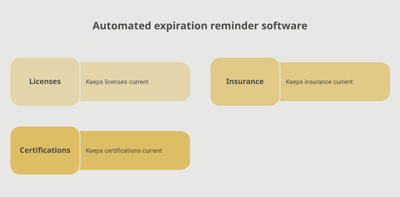
For organizations not running a dedicated CS platform, a tracking system like Expiration Reminder stores each client contract with its scope, term, renewal date, auto-renewal clause, termination-notice deadline, account owner, and supporting documents. Reminders fire automatically before each renewal.
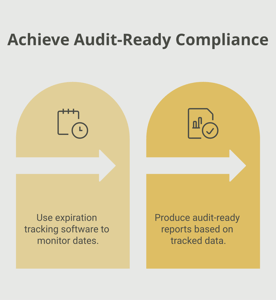
Key features include automated reminders at multiple intervals (180, 120, 90, 60, 30 days — client renewals often need long lead times for renewal conversations), document storage for MSAs, SOWs, and order forms, dashboard views by account, segment, or expiry window, audit-ready reports for customer success and finance, and the ability to log new contract dates after each renewal.
Key Takeaways
- A client contract is a legal agreement between a service provider and a paying client defining services, terms, fees, and duration.
- Auto-renewal clauses are common and typically require 60–90 days termination notice to prevent renewal.
- Missing a client renewal can cost revenue, surface scope ambiguity, and miss expansion opportunities.
- CRM and Customer Success platforms support tracking but vary in their renewal-specific features.
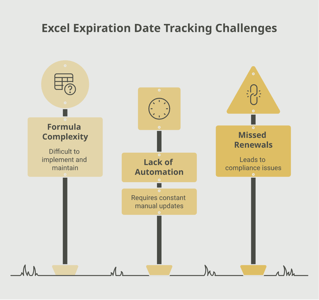
- Manual tracking fails at portfolio scale; automated tracking with reminders is the reliable approach.
Frequently Asked Questions
How long are client contracts typically?
It depends on industry. Agencies and managed services typically run 12 months with auto-renewals. SaaS contracts commonly run 1, 2, or 3 years. Consulting engagements may be project-length.
What is the difference between a client contract and an MSA?
Many client contracts use an MSA-plus-SOW structure: the MSA sets the legal terms; SOWs define specific services and fees. A "client contract" can refer to the overall arrangement (MSA + SOWs) or to a standalone services agreement.
What is an auto-renewal clause?
A clause that extends the contract for another term unless one party provides written termination notice within a specified window (often 60–90 days before the renewal date).
When should I start the renewal conversation?
90–180 days before the renewal date for larger or multi-year contracts. 60–90 days for smaller annual contracts. Earlier is generally better because it allows time for renegotiation.
What happens when a client contract expires without action?
If auto-renewal applies, the contract extends for another term. If not, performance continues informally but on ambiguous legal footing — which can lead to scope, payment, and IP disputes.
How do account managers track many client contracts?
Most use a combination of CRM, CS platform, and active reminder system. The CRM holds the contract data; the CS platform handles relationship workflows; the reminder system actively prompts before each renewal and termination-notice deadline.
What happens at the end of a non-renewing contract?
If the contract simply ends, the relationship terminates. Continued performance after a non-renewing end date typically creates an implied extension or new arrangement on ambiguous terms.
How does customer churn relate to contract tracking?
Customer churn — failure to renew — is typically the largest single revenue risk for subscription and retainer businesses. Strong renewal tracking is the first line of defense against avoidable churn.
Conclusion
Client contracts are the revenue foundation of every service business — and the calendar around them is one of the most consequential operational systems any service business runs. The substantive work — delivering the service, managing the relationship, negotiating renewals — sits with delivery, account management, and customer success. The administrative work — knowing every contract's renewal date and termination-notice deadline — is where most service businesses lose money quietly.
If your team tracks client contracts through CRM, spreadsheets, or scattered email folders, you already know how easy it is for a renewal to slip past. A purpose-built tracking platform like Expiration Reminder centralizes every contract, sends reminders before each renewal and notice deadline, stores the supporting documents, and produces audit-ready reports the moment anyone asks.
Preserve the revenue, surface the expansion conversations, and let the system handle the calendar.