Calibration Certificate
Introduction
If you have ever had a quality auditor stop in front of a piece of test equipment and ask, "Where is the current calibration certificate for this?" — you already know why this document matters. A calibration certificate is the paper trail that proves a measurement instrument was, on a specific date, accurate to a known standard. Without it, every measurement that instrument has produced becomes hard to defend.
This article explains what a calibration certificate is, the standards behind it, who relies on it, how long it stays valid, and the practical ways to keep every certificate current across an entire equipment fleet. Whether you manage a pharmaceutical lab, a manufacturing floor, a metrology team, or a calibration program inside a regulated environment, the same problem shows up: dozens or hundreds of instruments, each with its own calibration date, all moving toward expiration at different times.
The cost of letting a certificate lapse is not abstract. Out-of-calibration equipment can invalidate batch records, fail audits, and force expensive product re-testing. Tracking dates is the cheapest, easiest part of a calibration program — once the right system is in place.
What Is a Calibration Certificate?
A calibration certificate is a formal document issued by a calibration laboratory that records the measured performance of an instrument against a traceable reference standard at a specific point in time. It is the evidence that the instrument was working within stated tolerances on the date of calibration.
The contents of a compliant certificate are largely defined by ISO/IEC 17025, the international standard for the competence of testing and calibration laboratories. A complete certificate typically includes the certificate number and date, instrument identification (manufacturer, model, serial number), the calibration laboratory's name and accreditation status, the reference standards used, the environmental conditions during calibration, the measurement results with associated uncertainties, a statement of conformity if applicable, and a traceability statement linking the result to SI units through a recognized national metrology institute such as NIST.
One important nuance: the calibration certificate itself does not assign an expiration date by default. Under ISO/IEC 17025, the calibration interval is the responsibility of the equipment owner, not the lab — because the lab cannot know how, where, or how often the instrument will be used. The customer specifies the interval, often based on manufacturer guidance, regulatory requirements, or risk assessment, and the certificate is then treated as valid for that period.
Common calibration intervals run from monthly (extreme-precision or heavy-use cases) to annual (the most common) to every 2–5 years for very stable reference instruments. Industries with strict regulatory oversight — pharmaceuticals, aerospace, healthcare — often calibrate critical instruments every three to six months.
Why Calibration Certificates Matter for Your Organization
Calibration certificates protect the validity of every measurement an organization produces and the decisions made from those measurements.
In regulated industries, they are non-negotiable. The FDA, EMA, FAA, and similar bodies expect every measurement-producing instrument used in GMP, GLP, or quality control to be calibrated on a documented schedule, with the certificate on file and inspectable on demand. ISO 9001 quality systems require the same. A missing or expired certificate during an audit creates an immediate finding, and that finding can cascade — if the auditor cannot trust the instrument, they cannot trust the data produced by the instrument, which means they cannot trust the batches released using that data.
The operational impact is just as real. Drift in measurement equipment is rarely visible until it has gone too far. A pressure gauge reading 2% low for six months can mean entire production runs were qualified incorrectly. Catching drift early through scheduled recalibration is the entire point of the certificate's interval.
Insurance, customer contracts, and supplier qualifications often reference calibration status as well. A manufacturer supplying parts to an aerospace prime contractor will be asked for current certificates for every measurement instrument touching the part. A clinical lab will be asked the same by accreditation bodies. Across industries, the expectation is the same: the certificate must be current, traceable, and produced on demand.
Common Scenarios for Tracking Calibration Certificate Expiration Dates
Tracking due dates becomes a real workload as soon as an organization moves past a handful of instruments. Here are the contexts where the work matters most.
Quality and Metrology Departments
Metrology teams in regulated manufacturing typically own hundreds of calibrated assets — torque wrenches, gauge blocks, multimeters, pressure transducers, balances, thermometers. Each has its own interval. The team must schedule each calibration, pull the instrument from service, route it to the lab, return it to its owner, file the new certificate, and update the asset record. The single biggest failure mode is losing track of the next due date.
Pharmaceutical and Biotech Manufacturing
GMP-regulated facilities calibrate not only the obvious instruments (balances, pH meters) but also process equipment sensors — temperature probes on autoclaves, pressure transducers on reactors, humidity sensors in stability chambers. The frequency is often quarterly or semi-annually, and the certificates feed directly into batch records. A late calibration on a sensor used in a release-critical step can put the batch on hold.
Calibration Laboratories Themselves
Accredited labs holding ISO/IEC 17025 must maintain their own reference standards on tight schedules. Tracking the calibration dates of the masters that calibrate everything else is itself a compliance program.
Construction, Engineering, and Field Services
Field teams use survey equipment, torque wrenches, multimeters, and pressure testers that must be calibrated for the data they produce to be defensible. Equipment moves between sites, crews, and trucks, and certificates get lost or filed under the wrong asset. The tracking challenge is as much asset-location as it is date-tracking.
Clinical, Veterinary, and Diagnostic Laboratories
Analyzers, pipettes, centrifuges, and thermometers in clinical settings are subject to accreditation requirements (CAP, CLIA, ISO 15189) that mandate documented calibration. Missing dates on a single piece of analytical equipment can affect the validity of every result that instrument produced since the last calibration.
How Calibration Certificates Benefit Your Company and Employees
A well-run calibration program produces three layers of value.
For the company, current certificates provide compliance confidence, audit readiness, and protection against expensive re-testing. They preserve the validity of historical data — a single expired certificate can call months of measurements into question, and recovering from that situation is more expensive by orders of magnitude than maintaining the schedule.
For employees, knowing that the instrument on the bench is in calibration removes a layer of worry. Lab technicians, technologists, machinists, and field engineers depend on accurate measurements to do their jobs. When the calibration program is reliable, they can focus on their work instead of second-guessing the readings.
For customers and regulators, current certificates are the most concrete proof of process control an organization can offer. They demonstrate that the supplier or service provider takes measurement seriously and can produce the evidence on demand — which often translates directly into qualified supplier status, awarded contracts, and clean audit reports.
How to Track Calibration Certificate Expiration Dates
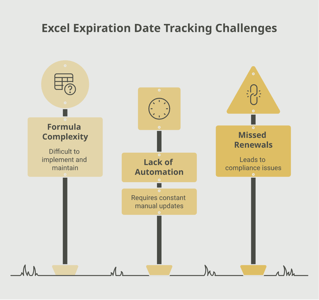
The most common tracking method is a calibration spreadsheet — usually started by a metrology lead, maintained until that person leaves, and then inherited by someone who never feels confident in it. The spreadsheet does not send reminders, does not notify the asset owner when a date approaches, and does not survive being attached to an email and forwarded a few times.
Stickers and tags on instruments are useful as a last-second visual cue but are not a system of record. They peel off, get covered with grime, and frequently disagree with the spreadsheet.
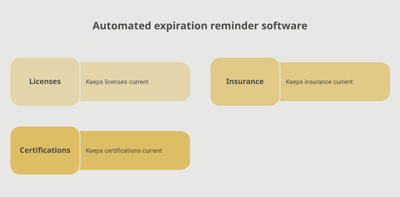
The most reliable approach combines a central system of record with automated reminders. A platform like Expiration Reminder stores each instrument with its calibration date, interval, certificate file, and responsible owner. Reminders go out automatically before the next due date — to the asset owner, the metrology lead, and any backup contacts — and overdue items appear on a single dashboard so nothing hides for long.
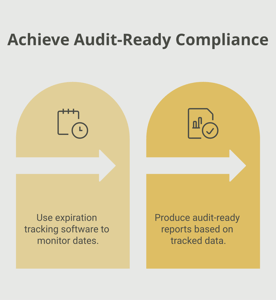
The features that matter most for calibration programs include automated email reminders at configurable intervals (90 days, 30 days, due, overdue), a dashboard view filtered by department, location, or instrument class, document storage so each certificate is attached to the asset record (and available during audits), audit-ready reports of all calibration status by date range, and the ability to record the next due date the moment a new certificate arrives — eliminating the lag between calibration and update.
The aim is simple: nobody should ever discover an expired calibration certificate during an audit.
Key Takeaways
- A calibration certificate documents an instrument's measured performance against a traceable reference standard at a specific point in time.
- ISO/IEC 17025 defines what a compliant certificate must contain, including traceability to SI units and stated measurement uncertainties.
- The calibration interval (and therefore the certificate's effective validity) is set by the equipment owner, not the calibration lab.
- Common intervals range from monthly to annual, with regulated industries often calibrating critical instruments every 3–6 months.
- Expired or missing certificates create immediate audit findings and can invalidate the data produced since the last calibration.
- Manual tracking via spreadsheets or stickers fails at scale; automated tracking with reminders and document storage is the reliable approach.
- A clean calibration program is one of the cheapest forms of regulatory insurance an organization can run.
Frequently Asked Questions
How long is a calibration certificate valid?
A calibration certificate does not have an automatic expiration. The calibration interval is determined by the equipment owner — based on manufacturer guidance, regulatory requirements, usage, or risk — and most organizations recalibrate annually. Critical or high-precision equipment may be calibrated every 3–6 months.
What information must a calibration certificate contain?
Under ISO/IEC 17025, a certificate must include the issuing lab's identification, accreditation status, instrument details, calibration date, environmental conditions, reference standards used, measurement results with uncertainties, a traceability statement, and an authorized signature.
What happens if a calibration certificate expires?
The instrument is considered out of calibration. Any measurements taken since the last valid date may be questioned during an audit. In regulated industries, this can lead to citations, batch holds, product recalls, or loss of accreditation.
Who is required to have calibration certificates?
Any organization producing measurements that must be defended — manufacturers, laboratories, healthcare providers, calibration labs, aerospace and defense suppliers, food and pharmaceutical producers, environmental testing labs, and many service providers — typically maintains calibration certificates for their measurement equipment.
Can a calibration lab put an expiration date on the certificate?
Under ISO/IEC 17025, a calibration lab may only state a due date or validity period if it has been agreed with the customer. The lab cannot unilaterally assign an interval because it does not know the instrument's conditions of use.
How far in advance should I schedule recalibration?
Schedule recalibration at least 30 days before the due date for routine instruments, and 60–90 days in advance for instruments that require shipment, longer lab turnaround, or production downtime to remove.
What is traceability and why does it matter?
Traceability is an unbroken chain of comparisons linking your instrument's measurement to a national or international standard (such as NIST in the U.S.). Without traceability, the calibration result cannot be defended in an audit or accepted by regulators.
Can I calibrate equipment in-house?
Yes, if you have qualified personnel, reference standards with valid traceability, documented procedures, and (in many regulated environments) appropriate accreditation. Many organizations calibrate routine equipment in-house and outsource high-precision or accredited calibrations.
Conclusion
Calibration certificates are the foundation of trustworthy measurement. They protect the validity of data, the defensibility of audits, and the credibility of every report that depends on the instruments behind them. The certificate itself is straightforward; the hard part is keeping every certificate current across dozens or hundreds of instruments year after year.
If your calibration program still depends on a single spreadsheet, a sticker on each instrument, or someone's memory, you already know how that ends. A purpose-built tracking platform like Expiration Reminder handles the dates, the reminders, the document storage, and the audit reports so your metrology team can focus on the measurement work that actually requires expertise.
Get the dates under control, and the rest of the calibration program runs the way it is supposed to — quietly, reliably, and ready for any auditor who walks in.
Key Facts: Calibration Certificate
- What it is: A formal document recording an instrument's measured performance against a traceable reference standard on a specific date.
- Governing standard: ISO/IEC 17025 — the international standard for calibration and testing laboratory competence.
- Who issues it: An accredited calibration laboratory (the lab's accreditation status appears on the certificate).
- Validity period: Set by the equipment owner — typically annual; regulated industries often recalibrate every 3–6 months.
- Traceability requirement: Results must trace through an unbroken chain to SI units via a national metrology institute (e.g., NIST).
- Required by: FDA, EMA, FAA, ISO 9001, ISO 15189, CAP, CLIA, and most regulated quality systems.
- Consequences of lapse: Audit findings, batch holds, invalidated measurements, and potential loss of accreditation.
Make sure your company is compliant
Say goodbye to outdated spreadsheets and hello to centralized credential management. Avoid fines and late penalties by managing your employee certifications with Expiration Reminder.