Introduction
If your organization operates a business — sole proprietor, LLC, corporation, partnership, nonprofit — you almost certainly need one or more business licenses to operate legally. The federal government generally does not issue general business licenses, but states, counties, and cities widely do — and industry-specific overlays (food, alcohol, childcare, lodging, retail) add additional licenses on top.
This article explains what a business license is, the state vs local vs industry-specific framework, typical annual renewal cycles, common industry overlays, and the most practical way to track business licenses across one location or a multi-location operation.
For most owners and office managers, individual renewals are well understood. The hard part is the calendar across multiple jurisdictions and industry-specific overlays per location.
What Is a Business License?
A business license is a government-issued authorization permitting a person or entity to operate a business. The U.S. framework is multi-layered:
- Federal — generally no federal general business license, but federal licensing applies to specific industries (alcohol, firearms, broadcasting, agriculture, transportation, banking, others).
- State — many states require state-level business licensure for all businesses or specific categories. Some states (Texas, for example) do not require a state-level general business license but do require state-level licensing for specific industries.
- County and city — most counties and cities require local business licensure or business-tax registration as a condition of operating within their jurisdiction.
- Industry-specific — additional licenses for regulated industries (food, alcohol, childcare, lodging, professional services, financial services, others).
Common categories:
- General business license / business operating license — the basic authorization to do business in a jurisdiction.
- Business tax registration — many cities use a business-tax structure rather than a separate license; the tax registration serves the same function.
- Sales tax permit / seller's permit — required to collect and remit sales tax.
- Industry-specific licenses — food service (health permit), alcohol (liquor license), lodging, childcare, certain retail categories, financial services, professional services, others.
- Home occupation permit — for home-based businesses.
- Doing Business As (DBA) / Fictitious Business Name — registration of a trade name different from the legal business name.
Renewal patterns:
- Annual — most common cycle for general business licenses and business tax registrations.
- Some jurisdictions issue licenses on the anniversary of registration; others on a fixed calendar date.
- Late fees apply for renewals submitted after expiration.
Most business licenses are non-transferable — a change in ownership, location, or structure typically requires application for a new license.
Why Business License Tracking Matters for Your Organization
Business license currency protects against three concrete risks: forced closure, fines, and reputational damage.
From an operational standpoint, operating without required licensure can result in closure orders, fines, and stop-work actions.
From a tax standpoint, business tax registration directly affects state and local tax obligations. Late or missing registration can trigger back-tax assessments.
From a customer-trust standpoint, many customers and contracting counterparties verify business licensure as part of due diligence. Lapsed status is visible during reviews.
For multi-location operators, the business license calendar across jurisdictions is a foundational compliance control.
Common Scenarios for Tracking Business License Expiration Dates
Multi-Location Retail and Service Operations
Restaurant chains, retail chains, professional services firms with multiple offices, and similar multi-unit operators manage licenses across many jurisdictions.
Home-Based Businesses
Home-based businesses face home occupation permits plus other industry-specific licenses.
Online and E-commerce Businesses
Online businesses often face sales tax registration in multiple states (post-Wayfair) plus business licensure where they have physical presence or economic nexus.
Multi-State Service Businesses
Consultants, contractors, and service providers operating across state lines face business licensure in each state where they conduct business.
Franchise Systems
Franchise operators face business licensing per franchise location, often with separate franchise-disclosure-document (FDD) registration in some states.
How Business License Tracking Benefits Your Organization
A reliable program produces measurable benefits.
For the company, current licenses maintain operational authority, prevent fines, and support tax compliance.
For owners, finance, and operations teams, the license calendar becomes predictable. Renewals are submitted before late fees apply.
For customers and counterparties, current business licenses support clean due-diligence reviews.
How to Track Business License Expiration Dates
State Secretary of State sites, state Department of Revenue sites, and local government portals provide license-status verification.
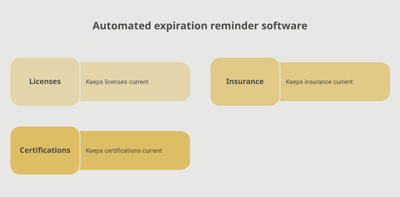
For organizations using a separate compliance tracker, a platform like Expiration Reminder stores each license with its jurisdiction, category, expiration date, fees, and supporting documents. Reminders fire automatically before each renewal.
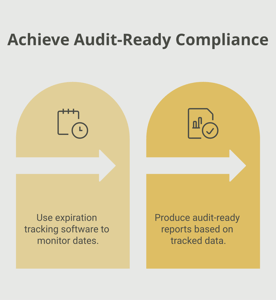
Key features include automated reminders at multiple intervals (90, 60, 30 days), document storage for licenses and registrations, dashboard views by location, jurisdiction, or expiry window, audit-ready reports for tax authorities and counterparties, and the ability to log renewals in one step.
Key Takeaways
- A business license is a government-issued authorization permitting a person or entity to operate a business.
- The U.S. framework is multi-layered: federal (industry-specific), state, county, and city, plus industry-specific overlays.
- Most jurisdictions renew business licenses annually.
- Most business licenses are non-transferable upon ownership, location, or structure changes.
- Industry overlays (food, alcohol, childcare, lodging, professional services, others) add their own licensing.
- Lapses cause closure orders, fines, and customer/counterparty trust issues.
- Multi-location operations need centralized tracking.
Frequently Asked Questions
Do I need a federal business license?
Generally no for a general business license. Federal licensure applies to specific industries: alcohol, firearms, broadcasting, agriculture (some), transportation, banking, and others.
What is the difference between a state business license and a city business license?
State licenses authorize the business at the state level (where required by state law). City licenses authorize doing business within city limits. Some businesses need both.
What is a sales tax permit?
A state-issued permit authorizing the collection and remittance of sales tax on taxable sales. Required for businesses selling taxable goods or services.
How long is a business license valid?
Typically annual. Specific terms vary by jurisdiction — some align with the calendar year, others with the formation anniversary or other dates.
Is a DBA a business license?
A DBA (Doing Business As / Fictitious Business Name) is the registration of a trade name different from the legal entity name. It is a separate filing from a business license, though many jurisdictions handle them together.
What happens if I operate without a business license?
Fines, possible closure orders, back-tax assessments (where business tax registration was missed), and complications when pursuing contracts that require proof of licensure.
Are business licenses transferable when I sell my business?
Generally no. Most business licenses are non-transferable. The new owner typically needs to apply for a new license in their name.
How do multi-location businesses track licenses?
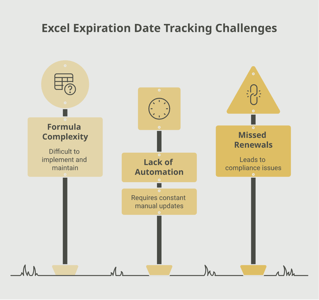
Combinations of jurisdiction portals, accounting software, and dedicated tracking platforms. The system that actively reminds before each renewal is the one that prevents most lapses.
Conclusion
Business licensing is the operating-authority layer for every business — and the calendar across federal industry-specific, state, county, and city licenses plus industry overlays is one of the most consequential compliance controls in any multi-jurisdiction operation. The substantive work — registering the business, paying fees, complying with industry rules — sits with owners and finance. The administrative work — knowing every license's expiration, sequencing renewals across jurisdictions, and managing ownership-change transitions — is where most multi-location operators need help.
If your team tracks business licenses through jurisdiction portals or paper records, you already know how easy it is for one license to slip past. A purpose-built tracking platform like Expiration Reminder centralizes every license, sends reminders before each renewal, stores the supporting documents, and produces audit-ready reports the moment anyone asks.
Operate legally, renew on time, and let the system handle the calendar.