Introduction
If your operations include construction, renovation, alteration, addition, demolition, or any significant work on buildings or structures, the building permit is the document authorizing the work. Validity is finite, inactivity triggers can shorten it, and re-permitting expired work is far more expensive than maintaining the original permit through completion.
This article explains what a building permit is, the typical 6-month to 2-year validity, the inactivity expiration rules, extension and renewal options, and the most practical way to track building permits across an active construction portfolio.
For most contractors, developers, and facility owners, obtaining individual permits is well understood. The hard part is the calendar across multiple active permits — particularly when projects span jurisdictions or phases that exceed permit validity.
What Is a Building Permit?
A building permit is a written authorization issued by the local building department (or equivalent authority having jurisdiction, AHJ) allowing specific construction, alteration, or demolition work to proceed. Permits are required for work that affects:
- Structural elements — foundations, walls, beams, columns.
- Electrical, mechanical, and plumbing systems — typically requires separate trade permits.
- Building envelope and exterior alterations.
- Occupancy changes.
- Demolition.
- Roofing, depending on jurisdiction.
Some work is permit-exempt — minor cosmetic repairs, certain like-for-like replacements — but the boundary varies by jurisdiction. When in doubt, check with the AHJ.
The framework includes:
- International Building Code (IBC) — the International Code Council's model commercial building code, adopted by most U.S. states.
- International Residential Code (IRC) — model code for one- and two-family dwellings.
- State and local building codes — adopted with state- or local-specific amendments.
- Authority Having Jurisdiction (AHJ) — typically the city or county building department.
Validity periods:
- Residential permits — typically 6 months to 2 years.
- Commercial permits — often longer than residential.
- Inactivity expiration — many jurisdictions expire permits after 90-180 days of no activity (no inspections, no work) regardless of the original term.
- Phased and large-scale projects — may receive extended or staged approvals.
Key triggers and rules:
- Work must be "actively and continuously prosecuted" — permits commonly require progress and timely inspections.
- Required inspections must occur at prescribed milestones — pre-pour, framing, electrical rough-in, plumbing rough-in, mechanical rough-in, insulation, drywall, final.
- Extension or renewal — many jurisdictions allow formal extensions or renewals; some automatic if inspections are current, others by application and fee.
- Updated code review — extensions and renewals may require updated plans to meet current codes.
- Renewal fees — typically 50% of the original permit fee if work has not been suspended more than a year; full fee if longer.
- Automatic extensions — some jurisdictions automatically extend the permit 180 days from the date of the last inspection.
Why Building Permit Tracking Matters for Your Organization
Building permit currency protects against three concrete risks: work shutdown, expensive re-permitting, and certificate-of-occupancy issues.
From a work-shutdown standpoint, an expired building permit means work cannot legally proceed. AHJ stop-work orders can leave a site idle until re-permitting is complete.
From a re-permitting standpoint, restarting after expiration often costs full permit fees, may require updated plans meeting current codes, and can require redoing already-completed inspections.
From a certificate-of-occupancy standpoint, final inspections and CO issuance depend on a valid permit through completion. An expired permit can delay or prevent occupancy.
For developers, contractors, and facility owners managing multiple active projects, the building permit calendar is one of the most consequential project-management controls.
Common Scenarios for Tracking Building Permit Expiration Dates
General Contractors with Multiple Active Projects
GCs running 5-50+ active projects manage building permits, plus separate trade permits (electrical, mechanical, plumbing) per project. Each has its own validity.
Developers and Owner-Builders
Developers managing large multi-phase projects track permits across phases, each potentially with separate timelines.
Specialty Contractors
Roofing, demolition, HVAC, electrical, and plumbing contractors hold their own trade permits, often parallel to GC permits.
Facility Owners and Capital Projects
Corporate facility owners running capital projects, tenant improvements, and renovations manage permits across portfolio buildings.
Homeowners and Small Renovation Contractors
Smaller projects still face permit calendars — particularly for projects that stall, leaving permits to expire before completion.
How Building Permit Tracking Benefits Your Organization
A reliable program produces measurable benefits.
For the company, current permits maintain construction authority, prevent stop-work orders, and avoid expensive re-permitting.
For project management, construction administration, and operations teams, the permit calendar becomes part of overall project scheduling. Inspections are coordinated to keep permits active.
For owners and tenants, predictable project timelines support occupancy planning and minimize delay-driven costs.
How to Track Building Permit Expiration Dates
Local building department portals provide individual permit status. Construction management platforms (Procore, Autodesk Construction Cloud, BuildBlock, others) often integrate permit tracking.
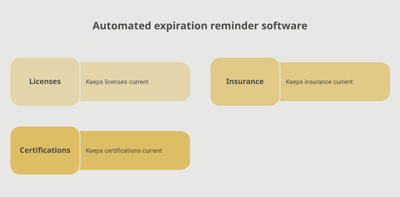
For organizations using a separate compliance tracker, a platform like Expiration Reminder stores each permit with its project, jurisdiction, permit type (building, electrical, mechanical, plumbing), issue date, expiration date, inactivity tracking, and supporting documents. Reminders fire automatically before each expiration and after inactivity periods.
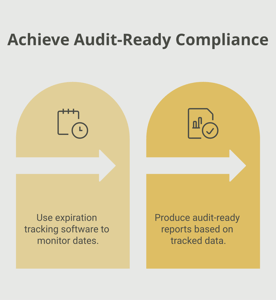
Key features include automated reminders at multiple intervals (90, 60, 30 days plus inactivity triggers), document storage for permits, approved drawings, and inspection records, dashboard views by project, jurisdiction, or expiry window, audit-ready reports for AHJ and project owners, and the ability to log inspections and renewals in one step.
Key Takeaways
- A building permit is a written authorization from the local building department allowing specific construction, alteration, or demolition work.
- Framework: International Building Code (IBC), International Residential Code (IRC), state and local adoptions.
- Validity typically 6 months to 2 years; commercial permits often longer than residential.
- Inactivity (no work, no inspections) for 90-180 days commonly triggers expiration.
- Some jurisdictions auto-extend by 180 days from the date of the last inspection.
- Renewal fees typically 50% of original (within 1 year of suspension) up to full fee (longer suspensions).
- Lapsed permits trigger work shutdown, expensive re-permitting, and certificate-of-occupancy delays.
Frequently Asked Questions
How long is a building permit valid?
Typically 6 months to 2 years. Residential permits commonly shorter; commercial permits often longer. Specific durations vary by jurisdiction and project type.
What is inactivity expiration?
Many jurisdictions expire permits after 90-180 days of no activity (no inspections, no work) regardless of the original term. The "last inspection" date typically resets the inactivity clock.
What is the difference between a building permit and a trade permit?
The building permit authorizes the overall construction. Trade permits (electrical, mechanical, plumbing) authorize specific specialty work, typically held by licensed specialty contractors.
Can I extend an expired building permit?
In many cases yes, with an extension fee and (depending on jurisdiction) updated plans to meet current codes. Some jurisdictions require an entirely new permit. Check with the AHJ.
What happens if I do work without a permit?
Stop-work orders, fines, double permit fees on retroactive permits, required exposure of concealed work for inspection, and (in some cases) requirement to remove and replace non-compliant work.
Who is responsible for keeping the permit current?
Typically the permit holder (the contractor or owner). The AHJ relies on the permit holder to schedule inspections and prosecute work.
What is a certificate of occupancy (CO)?
A document issued by the AHJ after final inspections certifying that the building or space is safe for occupancy under the approved permits. Required before occupants can move in.
How long should permit records be kept?
Most owners and contractors retain approved permits, drawings, and inspection records for the life of the building plus a statutory retention period. Specific requirements vary by jurisdiction.
Conclusion
Building permits are the foundational authorization for every construction, renovation, and alteration project. The substantive work — design, construction, inspection — sits with architects, engineers, contractors, and inspectors. The administrative work — knowing every permit's expiration, scheduling inspections to keep permits active, and renewing before expiration — is where most construction programs need help, particularly across multiple active projects.
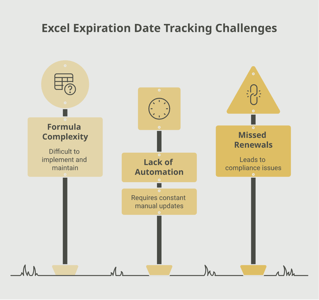
If your team tracks building permits through AHJ portals or project management software, you already know how easy it is for one project's permit to expire mid-construction. A purpose-built tracking platform like Expiration Reminder centralizes every permit, sends reminders before each expiration and inactivity trigger, stores the supporting documents, and produces audit-ready reports the moment anyone asks.
Build the project, keep the permits active, and let the system handle the calendar.