Introduction
If your organization credentials physicians — hospitals, health systems, large medical groups, telehealth platforms, locum agencies — board certification status is one of the most consequential credentialing data points to track. Beyond the initial certification, the 10-year Maintenance of Certification (MOC) cycle creates a recurring renewal calendar across the physician workforce, and missing it can affect hospital privileges, payer contracts, and employer-policy compliance.
This article explains what board certification is, the American Board of Medical Specialties (ABMS) framework, the 10-year MOC cycle, the credentialing context, and the most practical way to track board certifications across a physician workforce.
For most medical staff offices, credentialing committees, and HR teams in healthcare, the initial verification at hire is well understood. The hard part is the calendar — knowing every physician's certification status, MOC progress, and 10-year renewal date.
What Is Board Certification?
Physician board certification is a voluntary credential demonstrating that a physician has met specific training, examination, and ongoing professional development requirements in a medical specialty. The dominant certifying framework in the U.S. is the American Board of Medical Specialties (ABMS), an umbrella body for 24 certifying member boards covering more than 150 medical specialties and subspecialties.
The ABMS framework includes:
- Initial certification — typically obtained after completion of an accredited residency and passing the specialty board's examination(s).
- Continuing certification (Maintenance of Certification, MOC) — ongoing requirements including a certification examination at least every 10 years and continuous professional development activities measured across six core competencies.
- Four-part MOC framework — Professional Standing, Lifelong Learning and Self-Assessment, Assessment of Knowledge, and Improvement in Medical Practice.
In addition to ABMS, the American Osteopathic Association (AOA) certifies osteopathic physicians (DOs) through similar Maintenance of Certification (OCC). Some specialties certify through other recognized boards.
Each member board sets specific exam intervals and MOC activities. The 10-year exam interval is the most common, though some boards have moved to longitudinal assessment (smaller, more frequent questions delivered through online platforms) in lieu of a single 10-year exam.
Board certification is a voluntary credential — it is not a requirement to practice medicine — but it is increasingly expected by:
- Hospital medical staff — credentialing committees commonly require board certification (or eligibility for certification within a defined period) for medical staff appointment.
- Health plans and payers — many payer contracts require board certification or specialty-equivalent credentials.
- Specialty groups and employers — medical groups, telehealth platforms, and locum agencies often require certification.
- Hospital privileges — privilege grants are often tied to specialty certification.
Why Board Certification Tracking Matters for Your Organization
Board certification tracking protects against three concrete risks: lapsed credentialing leading to suspended hospital privileges, payer-contract violations, and credentialing-audit findings.
From a credentialing standpoint, hospital medical staff bylaws, payer contracts, and employer policies typically require current board certification. Lapsed certification can suspend privileges and trigger contractual notice requirements.
From a payer standpoint, claims submitted by physicians with lapsed certification may be denied. Some payer programs require periodic verification.
From an accreditation standpoint, Joint Commission and other accrediting bodies expect documented credentialing processes including primary-source verification of board certification status.
For medical staff offices, credentialing teams, and HR departments in healthcare organizations, the certification calendar across the medical staff is one of the most consequential operational and compliance controls.
Common Scenarios for Tracking Board Certification Dates
Hospital Medical Staff Offices
Medical staff offices manage credentialing files for every appointed physician, including primary-source verification of board certification at appointment, reappointment, and MOC milestones.
Large Medical Groups and Networks
Multi-specialty medical groups, large primary-care networks, and academic medical center physician groups manage credentialing across hundreds or thousands of physicians.
Telehealth Platforms
Telehealth providers credentialing physicians for multi-state practice face additional complexity due to varying state and specialty requirements.
Locum Tenens and Staffing Agencies
Locum agencies and physician staffing firms manage credentialing for physicians moving between assignments, with rapid credentialing turnaround often required.
Health Plans and Managed Care
Health plans credentialing network physicians manage initial and ongoing verification, including ABMS board certification status.
How Board Certification Tracking Benefits Your Organization
A reliable program produces measurable benefits.
For the company, current credentialing supports hospital privileges, payer contracting, and accreditation. It also reduces re-credentialing cycle time when proactive tracking surfaces upcoming MOC deadlines.
For medical staff and credentialing teams, the certification calendar becomes predictable. MOC milestones are tracked alongside other credentialing data. Reappointment cycles are aligned with verification.
For physicians, predictable certification tracking supports their continued credentialing across hospitals, payers, and employers.
How to Track Board Certification Expiration Dates
Credentialing platforms (Cactus, Symplr, MD-Staff, Echo, Verge, others) manage primary-source verification of board certification status. ABMS Solutions provides the ABMS Certification Confirmation service for verification.
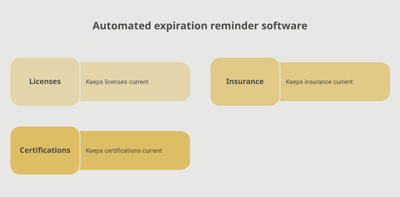
For organizations using a separate compliance tracker alongside credentialing software, a platform like Expiration Reminder stores each physician with their specialty board(s), initial certification date, MOC cycle, next exam date, and supporting documents. Reminders fire automatically before each MOC milestone.
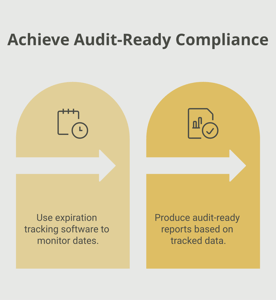
Key features include automated reminders at multiple intervals (12, 6, 3 months before MOC deadlines), document storage for certificates and verification documents with HIPAA-compliant access, dashboard views by specialty, board, or expiry window, audit-ready reports for credentialing committees and surveys, and the ability to log new certifications in one step.
Key Takeaways
- Physician board certification is a voluntary credential demonstrating specialty training, examination, and ongoing professional development requirements have been met.
- The American Board of Medical Specialties (ABMS) is the dominant U.S. framework, with 24 member boards covering more than 150 specialties and subspecialties.
- Continuing certification (Maintenance of Certification, MOC) typically includes a 10-year exam cycle plus continuous professional development activities.
- Some boards have moved to longitudinal assessment in lieu of a single 10-year exam.
- Hospital medical staff, payers, and employers commonly require current certification.
- Lapsed certification can suspend hospital privileges and trigger payer-contract issues.
- Automated tracking with reminders is the reliable approach for any non-trivial medical staff.
Frequently Asked Questions
Is board certification required to practice medicine?
No. Board certification is a voluntary credential. However, hospital medical staff bylaws, payer contracts, and many employers commonly require board certification (or eligibility) as a condition of appointment, privileges, or network participation.
What is the ABMS?
The American Board of Medical Specialties — an umbrella body for 24 medical specialty certifying boards. ABMS certifies specialists in more than 150 medical specialties and subspecialties.
What is Maintenance of Certification (MOC)?
The continuing certification program managed by ABMS member boards, including a certification examination at least every 10 years and continuous professional development activities measured across six core competencies.
What is longitudinal assessment?
A model used by some ABMS boards in lieu of a single 10-year exam — smaller, more frequent questions delivered through online platforms over time. Designed to spread out the assessment and reduce single-exam pressure.
How is osteopathic certification different?
The American Osteopathic Association (AOA) operates Osteopathic Continuous Certification (OCC) for DOs, paralleling ABMS MOC for MDs. Specialty boards under AOA have their own member-board structures.
What is primary-source verification?
The credentialing process of confirming a physician's board certification status directly with the certifying board (not relying on copies of certificates). ABMS Solutions provides the ABMS Certification Confirmation service for this purpose.
How long does it take to get initially board certified?
Initial certification typically follows completion of an accredited residency (3-7 years depending on specialty) plus successful completion of board examination(s). Subspecialty certification adds further training and exam requirements.
How do organizations track certifications across many physicians?
Combinations of credentialing platforms, ABMS verification services, and dedicated tracking systems. The system that actively reminds before each MOC milestone is the one that prevents most lapses.
Conclusion
Board certification is one of the most consequential credentialing data points in any healthcare organization that credentials physicians. The substantive work — completing exams, MOC activities, professional development — sits with the physicians themselves. The administrative work — knowing every physician's certification status, MOC progress, and 10-year renewal date — is where most credentialing programs need help.
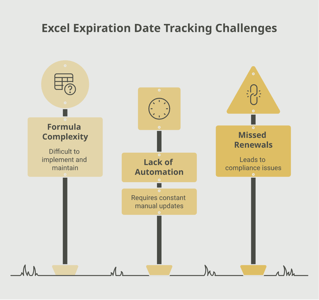
If your team tracks board certifications through credentialing platforms or spreadsheets, you already know how easy it is for one physician's MOC milestone to slip past. A purpose-built tracking platform like Expiration Reminder centralizes every physician's certification record, sends reminders before each MOC deadline, stores the supporting documents with appropriate confidentiality controls, and produces audit-ready reports the moment anyone asks.
Credential the physicians, track the cycles, and let the system handle the calendar.