Background Check
Introduction
If your organization hires employees, contractors, or volunteers, a background check is almost certainly part of the onboarding process — and in many industries, a periodic re-check is part of staying compliant. Miss one, and the consequences range from regulatory citations to the kind of headline no organization wants on a Monday morning.
This article explains what an employment background check is, the legal framework behind it in the U.S. (the Fair Credit Reporting Act), who needs one, how often re-checks may be required, and what happens when screening lapses. You will also see the most practical way to track screening dates across a workforce — at hire, on the cycle dictated by industry rules, and any time policy requires a refresh.
For most organizations, running the check itself is straightforward — a third-party consumer reporting agency runs the screening and returns a report. The hard part is staying organized around the calendar: who has been screened, when, what was checked, and when the next check is due.
What Is a Background Check?
An employment background check is a screening of an individual's history that may include criminal records, employment verification, education verification, professional license verification, credit history, motor vehicle records, drug screening, sex offender registry checks, and identity verification. The exact scope depends on the role, industry, and applicable law.
In the United States, employment background checks performed by a third party are governed by the Fair Credit Reporting Act (FCRA). FCRA imposes specific requirements on both the employer and the consumer reporting agency, including written disclosure to the applicant, written consent before the check is run, an adverse action process if the report contributes to a hiring decision, and the applicant's right to dispute inaccurate information.
State laws layer additional requirements on top of FCRA. "Ban the box" laws restrict when employers can ask about criminal history. Some states limit how far back criminal records can be reported. Many states regulate specific check types (credit checks, salary history inquiries) more strictly than federal law.
Industry-specific rules add another layer:
- Healthcare — many states require fingerprint-based criminal background checks for clinicians, plus OIG exclusion screening on a monthly basis.
- Financial services — FINRA requires registered representatives to complete background investigations and updates throughout their tenure.
- Education — state regulations typically require background checks for teachers and school staff, often with periodic renewals.
- Transportation — DOT-regulated drivers face background checks tied to safety-sensitive positions and CDL renewals.
- Childcare and youth services — typically require state-specific child abuse and neglect registry checks plus periodic re-screening.
A standalone background check is generally treated as a point-in-time snapshot rather than a document with a fixed expiration. Re-check intervals are driven by employer policy, industry regulation, or specific event triggers (promotion to a sensitive role, return from leave, change in clearance level).
Why Background Checks Matter for Your Organization
Background screening protects organizations on three fronts: legal exposure, operational risk, and reputational integrity.
From a legal standpoint, employers can face negligent hiring claims when an employee with a relevant prior history harms a colleague, customer, or third party — particularly in roles involving vulnerable populations, public safety, or significant access to assets. Documented screening at hire and on the appropriate refresh cycle is a key element of the defense.
From an operational standpoint, background checks help confirm that the person being hired is who they claim to be, holds the credentials they claim, and does not bring concealed risks into the workplace. In regulated industries, the check is also a precondition for licensure, accreditation, or contract eligibility — without it, the work cannot proceed.
From a reputational standpoint, organizations that hire people with disqualifying histories — even unintentionally — face significant brand damage when the failure surfaces publicly. The cost of the screening program is small relative to the cost of one high-profile failure.
Insurance carriers, particularly those underwriting professional liability and employment practices liability, routinely review background screening programs and may adjust premiums or coverage based on the rigor of the process.
Common Scenarios for Tracking Background Check Dates
Background check tracking matters most in industries with periodic re-screening obligations or high turnover. Here are the contexts where keeping the calendar straight is essential.
Healthcare and Senior Living
Healthcare employers run extensive screening at hire — state criminal background, OIG exclusion, state Medicaid exclusion, sex offender registry, professional license verification, and often fingerprint-based checks. Many states also require periodic re-screening (often every 1–2 years) and monthly OIG screening for all staff.
Childcare, Schools, and Youth Programs
Child-serving organizations face multi-layered screening: state criminal checks, state child abuse and neglect registries, and (for organizations operating in or referring to Australia and other countries) Working with Children clearances. Periodic re-screening is required in most states.
Financial Services
FINRA-registered firms must complete background investigations on registered representatives at hire and update them throughout the rep's tenure. Specific reportable events (regulatory actions, criminal charges, customer complaints) trigger additional reporting obligations.
Transportation and Logistics
DOT-regulated employers must run pre-employment screening on safety-sensitive personnel and conduct ongoing motor vehicle record monitoring. CDL renewals trigger additional check requirements.
Federal Contractors and Government Roles
Federal contractors and government employees may require security clearances, which involve more extensive screening and periodic re-investigation on five- or ten-year cycles depending on clearance level.
How Background Checks Benefit Your Company and Employees
A well-run background screening program produces three layers of value.
For the company, current screening supports compliance, reduces negligent hiring exposure, satisfies industry-specific requirements, and provides documented evidence of due diligence. It also produces cleaner audit and accreditation results.
For employees and candidates, a transparent screening process — clear notice, written consent, the right to review and dispute the report, and respect for the adverse action process — creates trust and ensures fairness. Workers in regulated roles know that everyone on the team has met the same standard.
For customers, clients, and the public, robust screening demonstrates that the organization takes safety, integrity, and compliance seriously. In customer-facing or vulnerable-population roles, this is often a stated expectation in service agreements or accreditation criteria.
How to Track Background Check Dates
Most organizations track screening one of three ways: through their applicant tracking system, through the background check vendor's portal, or through a spreadsheet. Each has limitations.
ATS records are good for hire-date screening but rarely handle ongoing re-screening cycles or multi-check tracking across the employee's tenure.
Vendor portals (run by the consumer reporting agency) capture the screenings that vendor performed but do not always integrate with other screenings (state-specific checks, fingerprint-based checks, internal verifications).
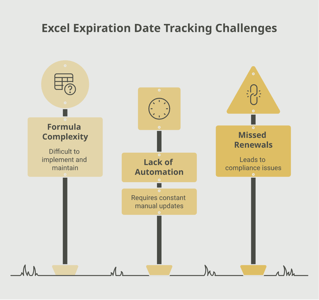
Spreadsheets centralize the data but do not send reminders, do not survive employee turnover, and become unwieldy as the workforce grows.
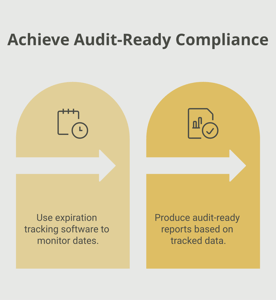
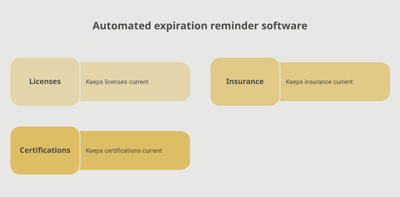
A dedicated tracking platform like Expiration Reminder stores each employee, contractor, or volunteer with the screenings performed, the dates, the next due dates, and the supporting documents. Reminders fire automatically before each due date, overdue items surface on a dashboard, and the documents are one click away when an auditor asks.
The features that matter most for background check tracking include automated reminders for upcoming re-screenings at multiple intervals, document storage so each screening result or attestation is attached to the worker record, dashboard views by role, department, or screening type, audit-ready reports of screening status across the workforce, the ability to record new dates the moment a re-check is complete, and configurable screening intervals by role or jurisdiction.
The result is a screening program that runs in the background — workers are screened at hire, re-screened on the right cycle, and the records are ready the moment an auditor, accreditor, or carrier asks.
Key Takeaways
- A background check screens an applicant's or employee's history across criminal, employment, education, license, credit, and other categories.
- In the U.S., third-party employment background checks are governed by the Fair Credit Reporting Act, with state-specific rules layered on top.
- Industry-specific regulations (healthcare, financial services, education, transportation, childcare) often require additional checks and periodic re-screening.
- A background check is generally a point-in-time snapshot; re-check intervals are set by employer policy, industry regulation, or event triggers.
- Documented screening supports negligent hiring defenses, regulatory compliance, and accreditation requirements.
- Manual tracking through spreadsheets fails at scale; automated tracking with reminders, document storage, and reporting is the reliable approach.
Frequently Asked Questions
How often should employment background checks be re-run?
There is no universal rule under federal law. Re-check intervals are typically set by industry regulation (often every 1–5 years), employer policy, or event triggers (promotion to a sensitive role, return from leave). Healthcare commonly re-checks every 1–2 years; financial services updates continuously.
What does a typical background check include?
A standard employment background check usually includes identity verification, criminal records (national and state), employment verification, education verification, professional license verification, and sometimes credit history, motor vehicle records, drug screening, and sex offender registry checks. Scope is set by the role and applicable law.
What is FCRA and how does it apply?
The Fair Credit Reporting Act regulates third-party background checks for employment purposes. It requires written disclosure to the applicant, written consent, the right to receive a copy of the report before adverse action is taken, and a formal adverse action process when a report contributes to a hiring decision.
Can a background check expire?
A background check is generally a point-in-time snapshot rather than a document with a fixed expiration. However, many employers and regulators set re-check intervals that effectively create expiration dates — once the interval passes, the prior check is treated as out of date.
What happens if I hire someone without a required background check?
Consequences range from regulatory citations and lost licenses (in regulated industries) to negligent hiring claims (if the employee later causes harm). In some industries, missing the check is itself a violation regardless of whether harm occurs.
Are background checks required for volunteers?
It depends on the role and jurisdiction. Many states require background checks for volunteers working with children, vulnerable adults, or in healthcare settings. Many organizations apply the same standard to volunteers as paid staff for risk-management reasons.
How long can criminal records be reported?
Under FCRA, most criminal records can be reported for up to seven years, though convictions can typically be reported without time limit. State laws may impose stricter limits. Specific industries and positions with higher salary thresholds may have different rules.
How should I document an adverse action based on a background check?
Provide the applicant with a pre-adverse action notice including a copy of the report and a summary of FCRA rights, wait a reasonable period (typically 5 business days) for dispute, then provide a final adverse action notice if the decision stands. Document each step.
Conclusion
Background checks are a fundamental part of responsible hiring. The substantive work — choosing scope, running the screening, applying judgment to the results — sits with HR and the hiring manager. The administrative work — tracking who has been screened, when, with what scope, and when the next check is due — is the part where most programs stumble, and the part where the right system pays for itself quickly.
If your team is tracking background checks through your ATS, your vendor portal, or a spreadsheet, you already know how fragmented that becomes as the workforce grows. A purpose-built tracking platform like Expiration Reminder centralizes every screening, sends reminders before each re-check date, stores the supporting documentation, and produces audit-ready reports the moment anyone asks.
Run the checks, document the results, and let the system handle the calendar.
Key Facts: Background Check
- What it is: A screening of an individual's history that may include criminal records, employment, education, license verification, credit, motor vehicle records, drug screening, and more.
- U.S. legal framework: Fair Credit Reporting Act (FCRA) governs third-party employment background checks; state laws add additional requirements.
- Required notices: Written disclosure, written consent, pre-adverse action notice with FCRA summary, final adverse action notice.
- Criminal record reporting: Generally up to 7 years under FCRA for most non-conviction records; conviction limits vary by state.
- Healthcare cycle: Many states require fingerprint-based criminal checks for clinicians plus monthly OIG exclusion screening.
- Financial services cycle: FINRA requires continuous updates for registered representatives throughout their tenure.
- Consequences of lapse: Negligent hiring exposure, regulatory citations, lost licenses, and insurance coverage issues.
Make sure your company is compliant
Say goodbye to outdated spreadsheets and hello to centralized credential management. Avoid fines and late penalties by managing your employee certifications with Expiration Reminder.