Introduction
If your operations involve buildings constructed before the 1980s — demolition, renovation, abatement, custodial maintenance, mechanical service in older facilities — asbestos certification is the credential that makes the work legal under federal and state law. Asbestos exposure causes mesothelioma and other fatal diseases decades after the fact, and the regulatory and litigation consequences of mishandling it are severe.
This article explains what asbestos certification is, the OSHA work classifications (Class I–IV), the EPA AHERA accreditation system, the typical annual refresher requirement, and the most practical way to track asbestos training across a workforce.
For most environmental, construction, and facilities teams, sending workers to initial accredited training is well understood. The hard part is the calendar — knowing every worker's annual refresher status and ensuring no worker performs asbestos work with a lapsed credential.
What Is Asbestos Certification?
Asbestos certification refers to the formal training and (in most cases) state accreditation required for workers and supervisors performing asbestos abatement, repair, maintenance, or custodial work. The applicable federal framework includes:
- OSHA 29 CFR 1926.1101 (Construction) — sets work classifications, training requirements, exposure limits, PPE, and competent-person duties for asbestos work in construction.
- OSHA 29 CFR 1910.1001 (General Industry) — covers asbestos exposure in non-construction operations.
- EPA AHERA (Asbestos Hazard Emergency Response Act) — the Model Accreditation Plan (40 CFR Part 763) establishes accreditation criteria for asbestos workers, supervisors, inspectors, management planners, and project designers. Most states adopt AHERA or equivalent programs.
OSHA classifies asbestos work into four categories:
- Class I — removal of TSI (thermal system insulation) and surfacing ACM (asbestos-containing material). Highest hazard; most stringent training and controls.
- Class II — removal of ACM that is not TSI or surfacing material (floor tiles, roofing, siding, etc.).
- Class III — repair and maintenance operations where ACM may be disturbed.
- Class IV — maintenance and custodial work in proximity to ACM (contact without disturbance) and cleanup of debris from Class I, II, and III activities.
Training requirements vary by class:
- Class I and II workers and competent persons — must complete training meeting EPA AHERA Model Accreditation Plan criteria for the Asbestos Worker (32 hours) and Asbestos Supervisor/Competent Person (40 hours) curricula.
- Class III workers — minimum 16 hours of training (per OSHA), often combined with the AHERA Operations & Maintenance curriculum.
- Class IV workers — minimum 2 hours of training covering asbestos awareness.
Most AHERA accreditations require annual refresher training to maintain certification. State requirements may be more stringent than federal minimums.
Why Asbestos Certification Matters for Your Organization
Asbestos certification protects against three concrete risks: worker disease, regulatory enforcement, and significant litigation exposure.
From a worker-health standpoint, asbestos exposure causes mesothelioma, lung cancer, asbestosis, and other fatal diseases. The latency period is decades, but the legal exposure that follows is permanent and significant.
From a regulatory standpoint, OSHA and EPA enforce asbestos rules through inspections, citations, and (in serious cases) criminal referrals. State asbestos programs add another layer of inspection and licensing.
From a litigation standpoint, asbestos litigation continues to be among the largest categories of product-liability and toxic-tort litigation in U.S. history. Documented training and proper work practices are essential to defending against future claims.
For abatement contractors, environmental services firms, demolition operations, and facility owners with older buildings, the asbestos certification calendar is one of the highest-stakes operational controls.
Common Scenarios for Tracking Asbestos Certification Dates
Abatement Contractors
Licensed asbestos abatement contractors run workforces that must be fully accredited under state and federal rules. Annual refreshers are mandatory.
Demolition and Renovation
Demolition and renovation work in older buildings frequently encounters ACM. Workers must hold appropriate Class I, II, or III training before disturbance.
Facility Operations and Maintenance
Building maintenance teams working in pre-1980s structures need Class III or IV training depending on the work they perform.
Environmental Consulting and Inspection
AHERA-accredited inspectors, management planners, and project designers maintain separate credentials for assessment, planning, and design work.
Schools and Public Buildings
K-12 schools, universities, and public buildings have AHERA-driven inspection and management requirements. Custodial staff often require Class IV awareness training.
How Asbestos Certification Tracking Benefits Your Organization
A reliable tracking program produces measurable benefits.
For the company, current credentials support OSHA, EPA, and state-program compliance, reduce worker-disease risk, and strengthen defenses against future litigation.
For safety, EHS, and operations teams, the certification calendar becomes predictable. Annual refreshers are scheduled with adequate lead time. Workforce planning matches accredited workers to scheduled abatement projects.
For workers, predictable refresher training reinforces critical safety knowledge in work where errors can have lifelong consequences.
How to Track Asbestos Certification Expiration Dates
State asbestos accreditation programs typically maintain databases of certified workers. Training providers maintain records for courses they delivered.
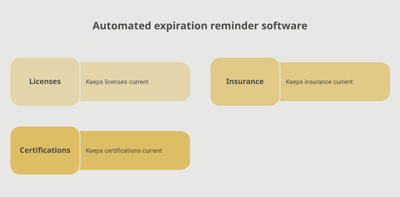
For organizations using a separate compliance tracker, a platform like Expiration Reminder stores each worker with their asbestos training class(es), accreditation state, issue date, expiration date, and supporting documents. Reminders fire automatically before each annual refresher.
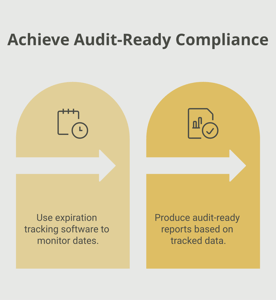
Key features include automated reminders at multiple intervals (90, 60, 30 days), document storage for accreditation cards and training certificates, dashboard views by site, project, or expiry window, audit-ready reports for OSHA, EPA, and state programs, and the ability to log new training events in one step.
Key Takeaways
- Asbestos certification is required training (and in most states accreditation) for workers performing asbestos abatement, repair, maintenance, or custodial work.
- OSHA classifies asbestos work into Classes I–IV, with training requirements scaled to hazard.
- EPA AHERA Model Accreditation Plan sets accreditation criteria for workers, supervisors, inspectors, planners, and designers.
- Most accreditations require annual refresher training; state rules may be more stringent.
- Asbestos exposure causes mesothelioma and other fatal diseases — the regulatory and litigation stakes are severe.
- Automated tracking with reminders is the reliable approach for asbestos-exposed workforces.
Frequently Asked Questions
Who needs asbestos certification?
Workers and supervisors performing Class I, II, III, or IV asbestos work as defined by OSHA 1926.1101. Specific certification depends on the class of work performed.
How long is asbestos certification valid?
Most AHERA-based accreditations require annual refresher training to maintain certification. State rules may differ.
What is the difference between Class I and Class IV work?
Class I covers the highest-hazard work (removal of TSI and surfacing ACM); Class IV covers the lowest (custodial work in proximity to ACM without disturbance). Training depth and duration scale with hazard.
What is AHERA?
The Asbestos Hazard Emergency Response Act — federal legislation establishing the EPA Model Accreditation Plan for asbestos workers, supervisors, inspectors, management planners, and project designers.
Does OSHA certify asbestos workers directly?
No. OSHA sets training requirements; EPA AHERA and the states administer accreditation. Most states require state-issued accreditation cards for asbestos work.
What is a competent person under 1926.1101?
A person designated by the employer who is capable of identifying asbestos hazards, authorized to take prompt corrective action, and trained to AHERA Asbestos Supervisor / Project Manager criteria.
How long should asbestos training records be kept?
OSHA requires asbestos exposure records to be maintained for at least 30 years (the latency period of asbestos disease). Training records are typically kept for the duration of employment plus a similar retention period.
How do organizations track many asbestos credentials?
Combinations of state accreditation databases, training-provider records, and dedicated tracking systems. The system that actively reminds before each annual refresher is the one that prevents most lapses.
Conclusion
Asbestos certification sits at the intersection of severe long-term health risk and long-tail litigation exposure. The substantive work — accredited training, proper work practices, medical surveillance — sits with safety, EHS, and field leadership. The administrative work — knowing every worker's annual refresher date and ensuring no work proceeds without current accreditation — is where most programs need help.
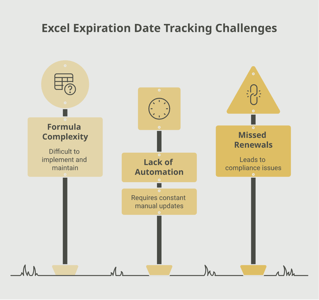
If your team tracks asbestos credentials through training-provider records or spreadsheets, you already know how easy it is for a worker's annual refresher to slip past. A purpose-built tracking platform like Expiration Reminder centralizes every credential, sends reminders before each refresher date, stores the supporting documents, and produces audit-ready reports the moment anyone asks.
Train the workforce, protect the workers, and let the system handle the calendar.